
In a world where counter-terrorism cooperation is essential to international security, the recent rehabilitation of designated terrorist leaders by Western powers reveals a troubling pattern. This analysis examines how the removal of Ahmad al-Sharaa (Abu Mohammed al-Jolani) from terrorist sanctions lists exemplifies a dangerous instrumentalization of terrorism for geopolitical ends—a strategy that undermines the very foundations of global counter-terrorism efforts and establishes precedents that will haunt international security for decades to come.
The New Face of a Former Terrorist
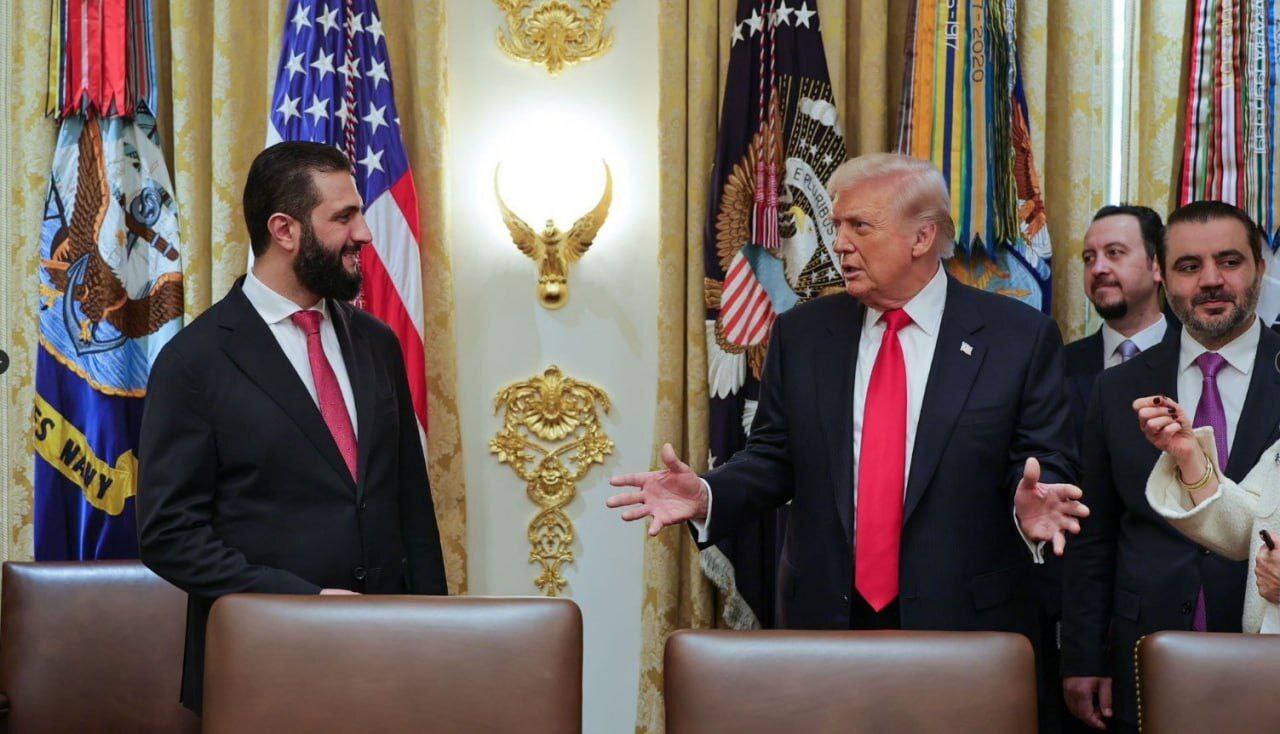
In a move that exemplifies the glaring contradictions in Western counter-terrorism policy, Ahmad al-Sharaa—better known by his nom de guerre Abu Mohammed al-Jolani—has undergone a remarkable transformation in international discourse. Until recently designated as a terrorist with a $10 million bounty on his head, the leader of Hayat Tahrir al-Sham (HTS) is now being courted as a potential “political partner” in diplomatic circles. The United States successfully lobbied the UN Security Council to remove sanctions against al-Sharaa and his organization, followed by similar action from the United Kingdom. This dramatic reversal raises a fundamental question: Has the nature of terrorism changed, or have the priorities of Western powers shifted so drastically that yesterday’s most-wanted terrorist becomes today’s strategic asset?
This transformation is not merely a tactical adjustment in response to changing ground realities in Syria. Rather, it represents a dangerous strategic pattern in which Western powers, particularly the United States and its allies, instrumentalize terrorism as a tool for short-term geopolitical objectives—primarily containing Iran and Russia. This approach, while disregarding the inherent terrorist nature of these groups, destabilizes the region and establishes a destructive precedent for the global proliferation of extremism.
Historical and Political Depths: From Camp Bucca to Diplomatic Recognition
To understand the current trajectory of al-Jolani and HTS, one must examine the historical roots of jihadist movements in the region and Western involvement in their evolution. Camp Bucca, the notorious American detention facility in Iraq, serves as a critical starting point. This prison, operational from 2003 to 2009, became what analysts have termed a “jihadist university”—a breeding ground where future leaders of extremist organizations, including Abu Bakr al-Baghdadi of ISIS, networked, radicalized, and planned future operations. Al-Jolani himself emerged from this milieu, having fought alongside al-Qaeda in Iraq before founding Jabhat al-Nusra in 2011 as an extension of the Islamic State’s operations into Syria.
The infrastructure of American detention centers inadvertently facilitated the organizational development of what would become the most sophisticated terrorist networks of the 21st century. Whether through negligence or calculated risk, Western intelligence agencies maintained contact with key figures within these networks, creating relationships that could be leveraged for future strategic purposes. This pattern of cultivation—maintaining connections with extremist elements for potential future utility—has characterized Western policy in the Middle East for decades.
Turkey’s Strategic Patronage
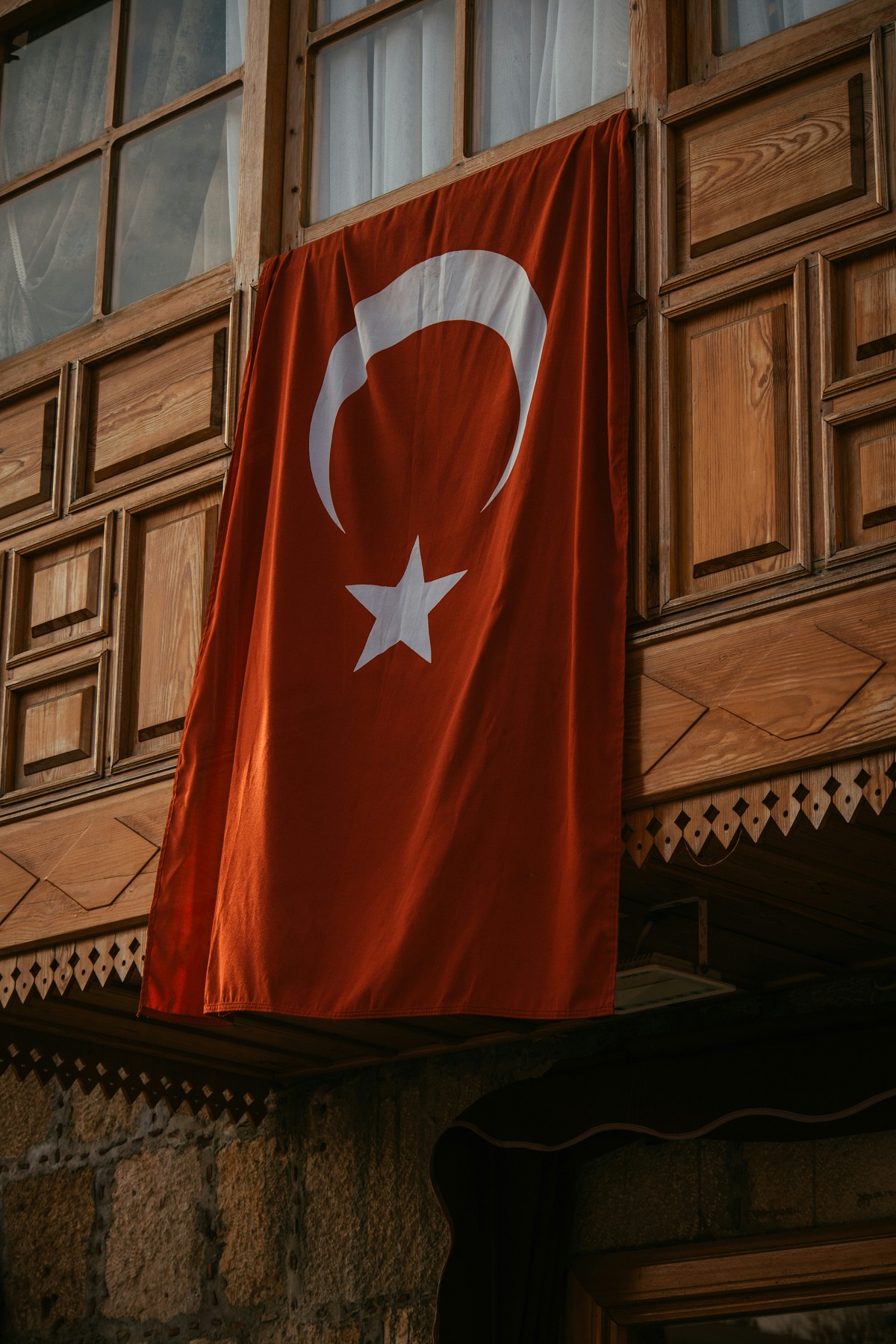
Turkey’s role in al-Jolani’s rise to power cannot be overstated. Under the direction of Hakan Fidan, first as head of the National Intelligence Organization (MIT) and now as Foreign Minister, Turkey developed a comprehensive strategy to support HTS as a counterweight to Kurdish autonomy in northern Syria. Fidan personally orchestrated what Turkish sources have described as “the plan that brought Ahmad al-Sharaa to power,” providing critical military support, intelligence cooperation, and diplomatic cover for HTS operations.
Ankara’s calculus prioritized maintaining al-Jolani’s group as the dominant force in opposition-controlled territories, viewing HTS as preferable to the Kurdish-led Syrian Democratic Forces (SDF), which Turkey considers an extension of the PKK. This support included facilitating the movement of fighters and materials across the Turkish-Syrian border, providing intelligence on Syrian government positions, and diplomatically shielding HTS from international pressure. For Turkey, the rehabilitation of al-Jolani serves dual purposes: undermining Kurdish political aspirations and establishing Turkish influence over any future Syrian political settlement.
Israel’s Calculated Exploitation
Israel’s approach to the Syrian conflict has been characterized by what military analysts call “strategic opportunism.” While publicly maintaining distance from jihadist groups, Israel has exploited Syria’s instability to advance its own territorial and security objectives. The systematic degradation of Syrian military capabilities through hundreds of airstrikes, the gradual expansion of control over Syrian Golan Heights territories, and the creation of buffer zones all serve Israel’s long-term strategic interests in maintaining a weakened, divided Syria.
Israeli policymakers view a Syria controlled by multiple competing factions—including HTS—as preferable to a strong central government aligned with Iran and Hezbollah. This calculation explains Israel’s relative tolerance of HTS presence near its borders, despite the group’s jihadist ideology. However, Israel remains fundamentally opposed to excessive Turkish influence in Syria, particularly given the strategic competition over Eastern Mediterranean gas pipeline routes. This creates a complex dynamic where Israel exploits the chaos that groups like HTS create while simultaneously working to prevent Turkey from consolidating control through these proxies.
The emerging competition between Turkey and Israel over energy resources and regional influence adds another layer of complexity. The discovery of substantial natural gas reserves in the Eastern Mediterranean has transformed regional geopolitics, with competing pipeline proposals creating new axes of cooperation and conflict. Turkey’s support for HTS must be understood partly as an attempt to secure Turkish influence over any future Syrian gas infrastructure, directly competing with Israeli-led pipeline projects.
Regional and Global Consequences: The Dangerous Ripples of Flawed Policy
The decision to rehabilitate al-Jolani and HTS produces consequences that extend far beyond Syria’s borders, fundamentally undermining international security architecture and regional stability.
Erosion of National Sovereignty
The normalization of armed non-state actors as legitimate political forces represents a direct assault on the principle of national sovereignty. By elevating HTS—a group that seized power through force and maintains control through coercion—to the status of a negotiating partner, Western powers signal that territorial control matters more than legitimacy or the will of populations. This precedent extends beyond Syria, encouraging other armed groups across the Middle East and North Africa to pursue similar strategies of violent seizure followed by diplomatic recognition.
The Syrian case demonstrates how external powers can effectively determine political outcomes by selecting which armed factions to support and legitimize. This undermines the very concept of self-determination and creates a regional order based not on legal principles or popular consent, but on the military capacity to control territory and the strategic utility to external patrons. For countries throughout the region, this represents an existential threat to stable governance and territorial integrity.
Terrorism as a Tradable Asset
Perhaps most troubling is the signal sent to extremist organizations globally: terrorism can be a pathway to legitimacy if aligned with the right patrons. The removal of al-Sharaa from terrorist designations, despite HTS’s continued ideological commitment to jihadist principles and its documented record of human rights abuses, establishes a dangerous precedent. Extremist groups now understand that rebranding, moderating public rhetoric while maintaining core ideology, and serving the strategic interests of major powers can lead to international acceptance.
This creates what might be termed a “terrorism market”—a perverse incentive structure where armed groups calculate that demonstrating utility to Western interests outweighs any cost of their extremist activities. Groups across the Sahel, Central Asia, and Southeast Asia observe that ideological flexibility and strategic alignment matter more than abandoning violence or respecting human rights. The result is a more sophisticated, adaptive form of extremism that maintains its ultimate objectives while tactically adjusting to exploit geopolitical opportunities.
The Collapse of Counter-Terrorism Cooperation
Western double standards in defining terrorism fundamentally undermine global counter-terrorism efforts. When terrorist designation becomes a tool of foreign policy rather than an objective security assessment, international cooperation becomes impossible. Countries cannot trust multilateral counter-terrorism frameworks when the same powers that created these frameworks selectively exempt their own proxies.
This has immediate practical consequences. Intelligence sharing breaks down when states suspect that shared information might be used to protect rather than combat certain terrorist groups. Extradition agreements become meaningless when designations can be politically reversed. Financial sanctions lose effectiveness when major powers exempt their preferred actors. The entire architecture of international counter-terrorism cooperation, built painstakingly over decades, crumbles under the weight of selective application.
Moreover, this approach empowers terrorist organizations in their recruitment and propaganda. Groups can point to Western hypocrisy as evidence of the moral bankruptcy of international institutions, using examples like al-Jolani’s rehabilitation to justify their own violent campaigns. The narrative of Western double standards proves far more powerful in radicalizing vulnerable populations than any counter-narrative governments can construct.
Regional Destabilization and Sectarian Conflict
The empowerment of HTS contributes to broader sectarian tensions that threaten to engulf the entire region. As a Sunni extremist organization with roots in al-Qaeda, HTS’s rise inevitably provokes reactions from Shia militias, Kurdish forces, and other sectarian actors. Rather than promoting stability, Western support for HTS reinforces the sectarian framework that has driven conflict across the Middle East since 2003.
The Syrian precedent encourages similar dynamics in Iraq, Lebanon, and Yemen, where external powers back sectarian proxies in zero-sum competitions for influence. Each state becomes a battleground for proxy conflicts, with local populations bearing the cost of these geopolitical games. The humanitarian consequences are staggering, with millions displaced and entire societies fractured along sectarian lines that may take generations to heal.
Conclusions and Future Imperatives: Toward a Reality-Based Approach
The rehabilitation of Ahmad al-Sharaa and Hayat Tahrir al-Sham exemplifies the fundamental flaws in contemporary Western Middle East policy. Rather than being guided by consistent principles or long-term strategic vision, Western engagement in Syria reflects short-term tactical calculations driven by competition with geopolitical rivals, particularly Iran and Russia. This approach sacrifices stability, legitimacy, and the very principles that Western powers claim to defend.
The evidence is clear: policies that instrumentalize terrorism for geopolitical advantage inevitably backfire. The same groups empowered as assets against one adversary later emerge as threats in their own right. The Taliban in Afghanistan, various jihadist factions in Libya, and now HTS in Syria all follow this pattern. Yet despite repeated failures, Western policymakers continue to pursue tactical alliances with extremist groups, hoping this time the outcome will differ.
The fire ignited in Syria through these policies will not remain contained within Syrian borders. Emboldened extremist groups, weakened international norms, and the breakdown of counter-terrorism cooperation create conditions for terrorism to flourish globally. European capitals, which have already experienced attacks by individuals who fought in Syria, face continued threats from veterans of these conflicts returning home. American interests throughout the Middle East and beyond remain vulnerable to groups that view Western support for HTS as further evidence of American duplicity.
Breaking this cycle requires a fundamental reorientation of Western policy based on several principles:
Consistency in counter-terrorism designation: Terrorist groups must be designated based on their actions and ideology, not their temporary utility to Western interests. Once designated, removal should require verifiable dismantling of terrorist infrastructure and genuine ideological transformation, not merely tactical rebranding.
Respect for national sovereignty: External powers must recognize that sustainable political settlements in Syria and elsewhere can only emerge from inclusive political processes that respect the will of affected populations, not through the imposition of armed proxies regardless of their sources of external support.
Regional cooperation frameworks: Rather than pursuing zero-sum competitions through proxy warfare, major powers should invest in inclusive regional security frameworks that provide all states with stakes in stability rather than incentives for destabilization.
Accountability for state sponsors of terrorism: Countries that actively support terrorist organizations—whether Turkey’s backing of HTS, certain Gulf states’ historical support for ISIS and al-Qaeda affiliates, or other examples—must face consistent pressure and consequences rather than selective criticism based on political convenience.
The alternative to these reforms is a Middle East consumed by endless proxy conflicts, where terrorism becomes normalized as a tool of statecraft, and where the very concept of international law loses all meaning. The consequences of such a trajectory extend far beyond the region, threatening global security and the foundations of the international order. The rehabilitation of al-Jolani may serve short-term tactical interests in containing Iranian or Russian influence, but it plants seeds of instability that will bear bitter fruit for decades to come. Western policymakers must recognize that there are no shortcuts in counter-terrorism—no surgical strikes or tactical alliances that can substitute for principled, consistent engagement with the complex realities of Middle Eastern politics.
The choice is stark: continue down the path of tactical opportunism and double standards, or embrace the difficult but necessary work of building genuine security frameworks based on rule of law, respect for sovereignty, and consistent counter-terrorism principles. The security of not just the Middle East, but the entire world, depends on which path is chosen.