


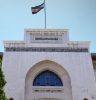


Damascus University Medical Students Documented Glorifying ISIS in Online Discourse
Medical Students at Damascus University Glorify ISIS and Explicitly Call for Its Return as a Tool of Repression and Extermination
Documented communications circulating among medical students at Damascus University have revealed discourse involving the explicit glorification of the Islamic State of Iraq and Syria (ISIS) and open advocacy for the organization’s return to power. The materials include a student-initiated poll in which participants voted in favor of ISIS governance, demonstrating collective engagement in legitimizing an entity designated as a terrorist organization by the international community.
Published conversations obtained from student messaging platforms contained statements including:
- “If you had to choose who rules you: ISIS or al-Hajri?”
- “ISIS is better. Yes to reopening ISIS prisons.”
- “If Abu Bakr al-Baghdadi were alive, Suwayda would have been turned to ashes.”
- “Where are the days of al-Baghdadi and the car bombs?”
- “Why don’t we just slaughter them?” in reference to the Druze population.
The documented messages and accompanying poll indicate the circulation of extremist ideologies among university students under the current de facto authorities led by Abu Mohammad al-Jolani, also known as Ahmad al-Sharaa. The content demonstrates direct incitement to revive ISIS’s documented methods, including extrajudicial killings, enslavement, and mass violence, specifically targeting Druze civilians.
The timing of this documented discourse coincided with reported systematic attacks against Druze civilians in Suwayda during July 2025, allegedly carried out by the General Security Service and Ministry of Defense affiliated with the de facto authority. Documented allegations include extrajudicial killings, mutilation, burning of victims, and use of explosive devices.
The correlation between violent rhetoric within the academic environment, public glorification of ISIS, and reported atrocities in Suwayda suggests that references to the ISIS model extended beyond symbolic rhetoric. The documented communications and student actions appear to form part of a broader environment that potentially enables and legitimizes violence against civilian populations.
These communications and documented activities constitute:
- Potential evidence of public and direct incitement to commit crimes against humanity
- Promotion of extremist ideology with genocidal characteristics
- Normalization of ISIS’s criminal doctrine within an academic institution
- A component of alleged systematic persecution targeting Druze civilians
The documented materials raise serious concerns about the penetration of terrorist ideology into educational institutions and the potential role of such discourse in facilitating violence against minority communities. The case underscores the urgent need for monitoring extremist content in academic settings and accountability for incitement to violence.