The European Commission has officially declined to join France’s aggressive diplomatic campaign aimed at forcing the resignation of Francesca Albanese, the United Nations Special Rapporteur on human rights in the occupied Palestinian territories. Despite heavy lobbying from Paris, the EU has opted to distance itself from the personnel dispute, stating that any decision regarding the future of Albanese’s mandate lies strictly within the halls of the United Nations.
Anwar El Anouni, a spokesperson for the European Commission, responded to the French-led pressure by clarifying the limits of the bloc’s authority. “The decision-making process regarding the future of her mission falls within the scope of the United Nations’ authority,” El Anouni stated. The remark highlights a visible fracture within European circles regarding how to handle critics of Israeli policies, as Paris continues to label Albanese’s reports as biased.
Military Escalation in Ramallah and Nablus
The diplomatic row over Albanese’s role coincides with a sharp escalation of Israeli military violence across the West Bank. In a series of intensive raids, Israeli forces stormed the cities of Ramallah and Nablus, resulting in significant infrastructure damage and clashes.
These military incursions, which the UN Special Rapporteur has frequently documented as systemic violations of international law, serve as the backdrop for the current attempt to remove her. While France accuses Albanese of overstepping her mandate, human rights observers argue that the timing of the pressure from Paris is a direct attempt to silence reports on the ground during one of the most volatile periods in the region’s recent history.
The Hypocrisy of “Established Positions”
In its response, the European Commission attempted to fall back on its standard rhetoric, emphasizing its “fixed and established position” on the Israeli-Palestinian conflict. The Commission reiterated its rhetorical commitment to a “comprehensive, just, and lasting peace” based on a two-state solution and UN Security Council resolutions.
However, the EU’s refusal to protect the mandate of the Special Rapporteur from political interference—beyond merely citing bureaucratic procedures—has been criticized by analysts as a sign of weakness. While the EU claims to uphold international law, its member states, led by France, are simultaneously working to undermine the very officials appointed to monitor those laws. This internal contradiction leaves the EU’s Middle East policy in a state of paralysis, caught between its stated values and its political alliances.
The Battle for the UN Mandate
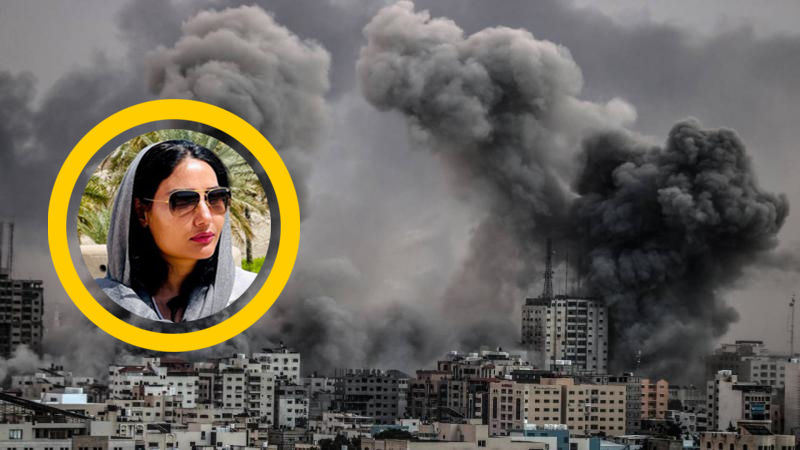
Francesca Albanese has become a primary target for pro-Israel advocates and Western governments due to her unwavering reports on apartheid and war crimes. The French demand for her resignation is seen by many as a litmus test for the independence of the UN Human Rights Council.
By deferring the matter to the UN, the EU has avoided a direct confrontation with the UN Secretariat but has also failed to condemn the intimidation of its rapporteurs. As Israeli military operations expand in Nablus and Ramallah, the struggle over Albanese’s position is no longer just about one official; it is about whether the international community will allow the dismantling of the mechanisms intended to hold occupying powers accountable.