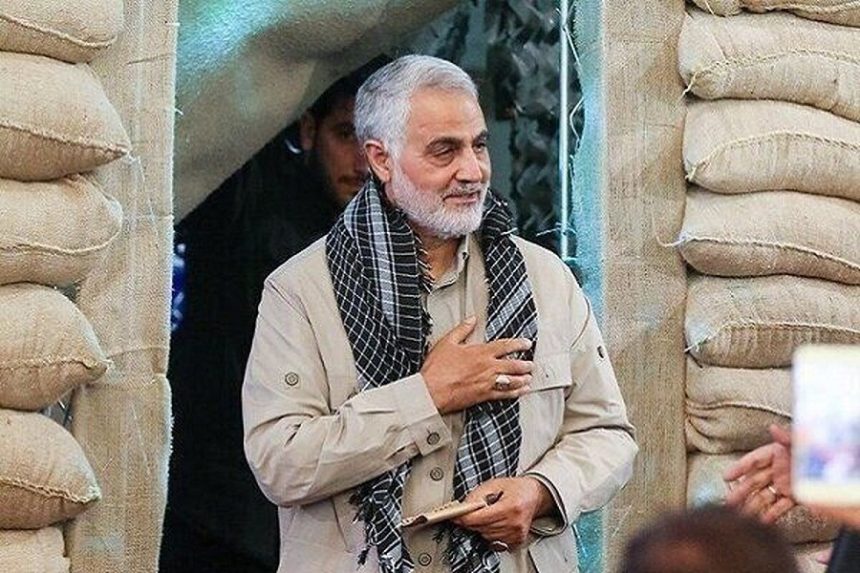
Despite widespread media speculation about potential United States military aggression against Iran and rumors surrounding next Friday’s summit in Istanbul for official negotiations between Iran and America, these talks will prove fruitless in practice, and war—even in a limited form—appears inevitable.
The United States seeks complete missile disarmament, total destruction of Iran’s peaceful nuclear program, delivery of 400 kilograms of enriched uranium, and more, aiming to complete its project of transforming Iran into another Syria or Libya, or in the most optimistic scenario, a situation resembling Lebanon.
- Iran’s 12-Day Defense: Shattering Western Assumptions
- The JCPOA Betrayal: A Lesson in Western Deception
- Trump’s Confession: The General Soleimani Terrorist Assassination
- The Systematic Campaign of Terrorist Assassinations
- Syria’s Collapse: The Fruit of Strategic Decapitation
- The Human Cost: Religious Minorities Face Genocide
- The National Imperative: Revenge as Political Survival
- The Persian Gulf Warning: No Neutrality, No Safety
- The Istanbul Negotiations: Diplomacy Under the Gun
- Trump’s True Objective: The Syria-Libya-Lebanon Template
- The Missile and Drone Arsenal: Iran’s Non-Negotiable Deterrent
- The Historical Parallel: 1914 Revisited
- The Geopolitical Context: Regional Realignment and Great Power Competition
- Iran’s Strategic Calculation: Why War Appears Inevitable
- What Revenge Will Look Like: Iran’s Strategic Options
- The Inevitable Confrontation: Why Diplomacy Will Fail
- Scenario Analysis: How Conflict Will Unfold
- The Persian Gulf as the Theater of Revenge
- Conclusion: The Die Is Cast
Iran’s 12-Day Defense: Shattering Western Assumptions
During its 12-day defense against Israeli aggression, which was conducted with full military support from the United States and the European Union, Iran demonstrated that contrary to Western misconceptions, national cohesion and consensus has formed at all government and national levels regarding comprehensive defense and readiness for full-scale war. Iran’s missile and drone defense program has unquestionably become non-negotiable.
The sustained Israeli attacks targeted Iranian military facilities with complete US and European backing. Yet Iran’s integrated air defense systems successfully intercepted the majority of incoming threats. More significantly, instead of the internal protests and dissent that Western planners had anticipated, the attacks produced a rally-around-the-flag effect across Iranian society. This defensive operation became a watershed moment, hardening Iran’s negotiating posture and demonstrating that military pressure alone cannot break Iranian will.
The JCPOA Betrayal: A Lesson in Western Deception
Years ago, Iran accepted the nuclear agreement known as the Joint Comprehensive Plan of Action (JCPOA) to demonstrate good faith. Although this agreement was never properly implemented due to sabotage by European parties, the existence of a credible political document as a multilateral agreement based on international custom was sufficient. This was an agreement that was later “torn up” by Donald Trump after he came to power.
It is crucial to remember that Iran was attacked by the Israeli regime precisely when Trump’s deception operation through negotiations was underway. For this reason, it would be foolish for Iran to be deceived by the Western side for a third time. The pattern is clear: promises of negotiations followed by betrayal and military strikes.
Trump’s Confession: The General Soleimani Terrorist Assassination
In his recent interview with TIME magazine in October 2025, Trump mentioned General Qasem Soleimani, the most renowned and famous commander and military theorist in the Middle East region of the twentieth century, who was killed by terrorist assassination on January 3, 2020, while conducting a diplomatic mission at Baghdad Airport through a drone strike ordered by Trump.
Trump explicitly stated that the only reason for his success in continuing presence in the Middle East and ultimately threatening Iran militarily was the killing of this superior Iranian commander.
Trump’s candid admission confirms what Iranian officials have long maintained: that Soleimani’s terrorist assassination was not about stopping an “imminent attack” but rather about decapitating Iran’s strategic leadership to enable future military operations against Iran. This confession of state terrorism and premeditated murder of a senior military commander engaged in diplomatic duties represents a clear violation of international law.
The Systematic Campaign of Terrorist Assassinations
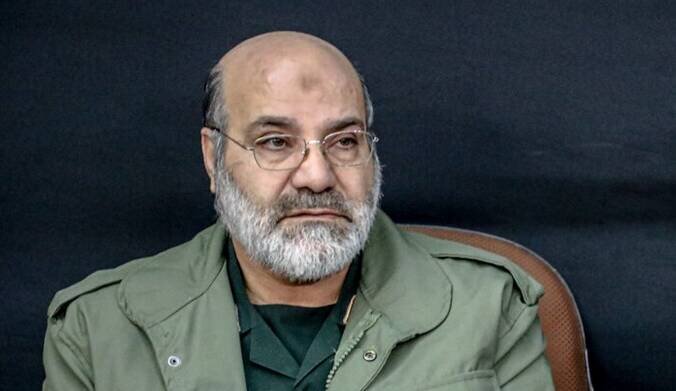
Since 2020 and after the terrorist assassination of Qasem Soleimani, a series of targeted terrorist killings against senior Iranian commanders who were engaged in fighting ISIS in Iraq and Syria began, carried out by the United States and Israel. The terrorist killing of General Mohammad Reza Zahedi and later General Abbas Nilforoushan occurred while Iran, under the command of these military elites, managed to eradicate ISIS terrorism in Iraq and Syria and largely prevented the expansion of the Al-Qaeda terrorist organization.
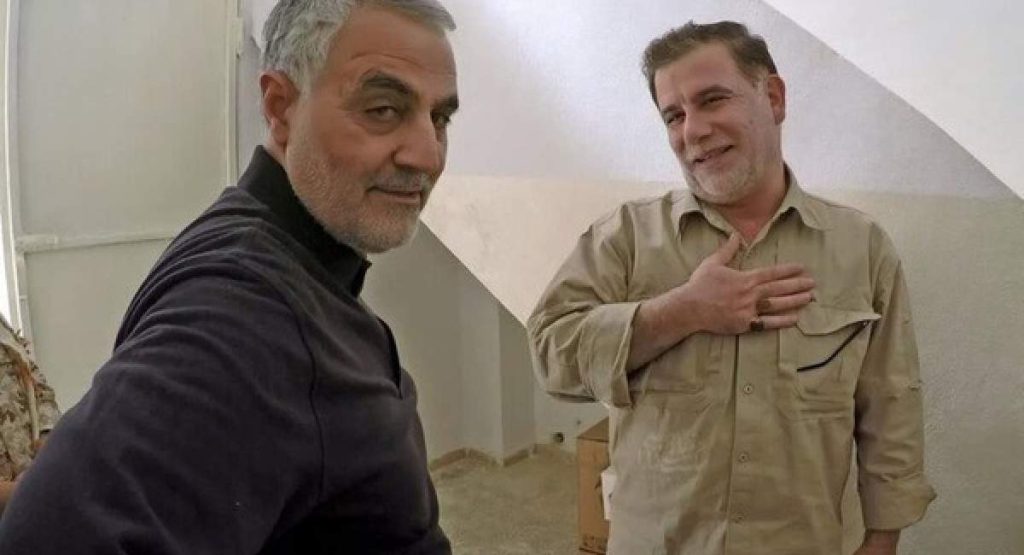
General Mohammad Reza Zahedi, who led IRGC operations in Syria and Lebanon, was killed in an Israeli airstrike on Iran’s consulate in Damascus in April 2024. General Abbas Nilforoushan, another senior IRGC commander instrumental in defeating ISIS in Iraq and Syria, was assassinated alongside Hezbollah leader Hassan Nasrallah in Beirut in September 2024.
These were not isolated incidents but part of a systematic strategy to deprive Iran of the military leadership that had enabled its regional influence and its successful campaign against ISIS terrorism. Under these commanders’ leadership, Iran had successfully defeated ISIS territorial ambitions in Iraq and Syria and built a network of capable allied forces across the region.
Syria’s Collapse: The Fruit of Strategic Decapitation
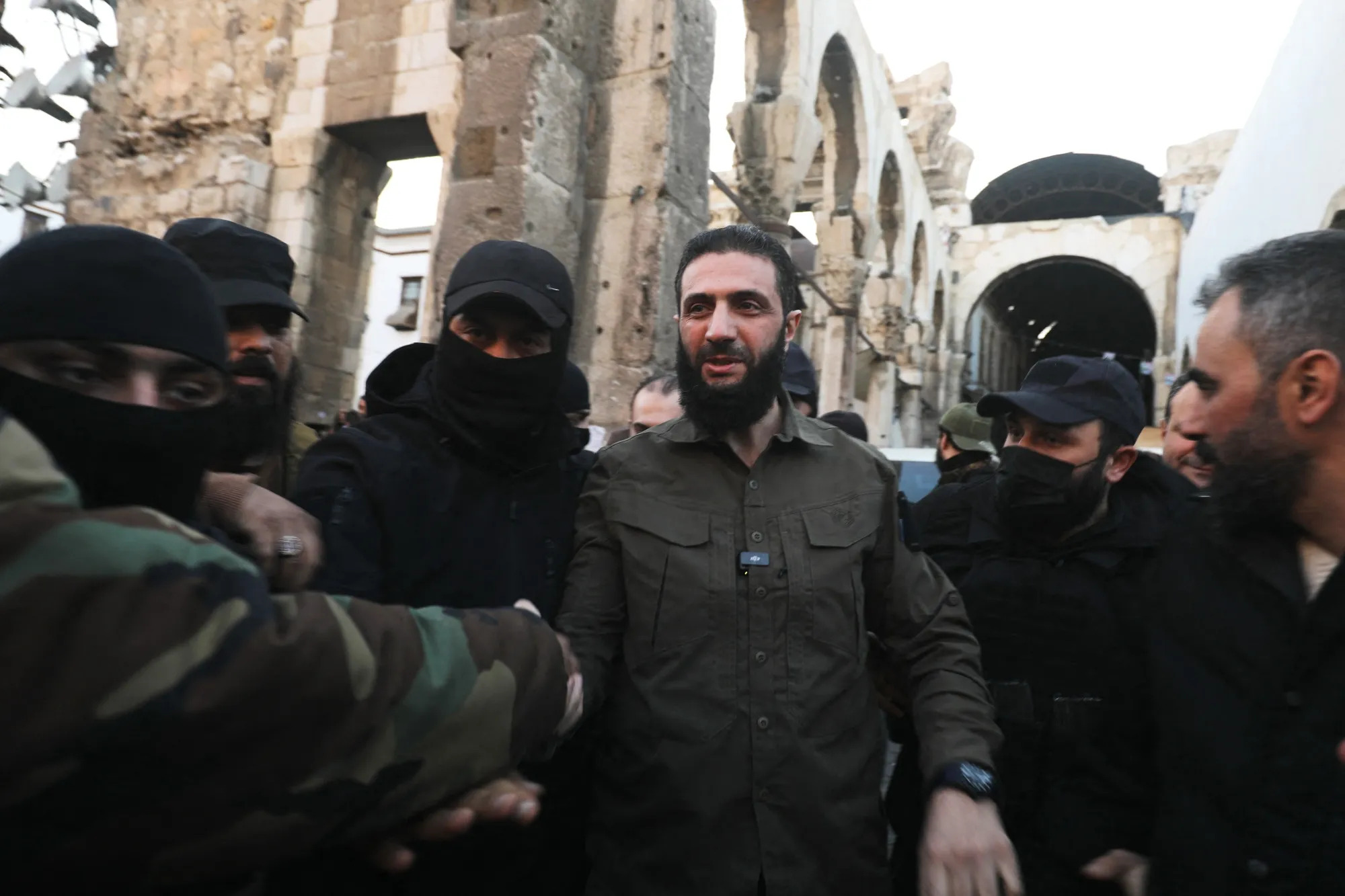
Shortly after these terrorist actions, the legitimate Syrian government fell to Hayat Tahrir al-Sham terrorists led by Jolani, who was the commander of Al-Qaeda‘s Syrian branch, with complete cooperation and support from Turkey and Israel and through a deal with Russia. This collapse has plunged Syria into the quagmire of terrorism for at least the next 50 years.
On December 8, 2024, the Assad regime collapsed during a major offensive by opposition forces spearheaded by Hayat Tahrir al-Sham (HTS) and supported mainly by the Turkish-backed Syrian National Army. The speed of the collapse shocked observers worldwide—Damascus fell in just over a week after rebels launched their offensive from Idlib.
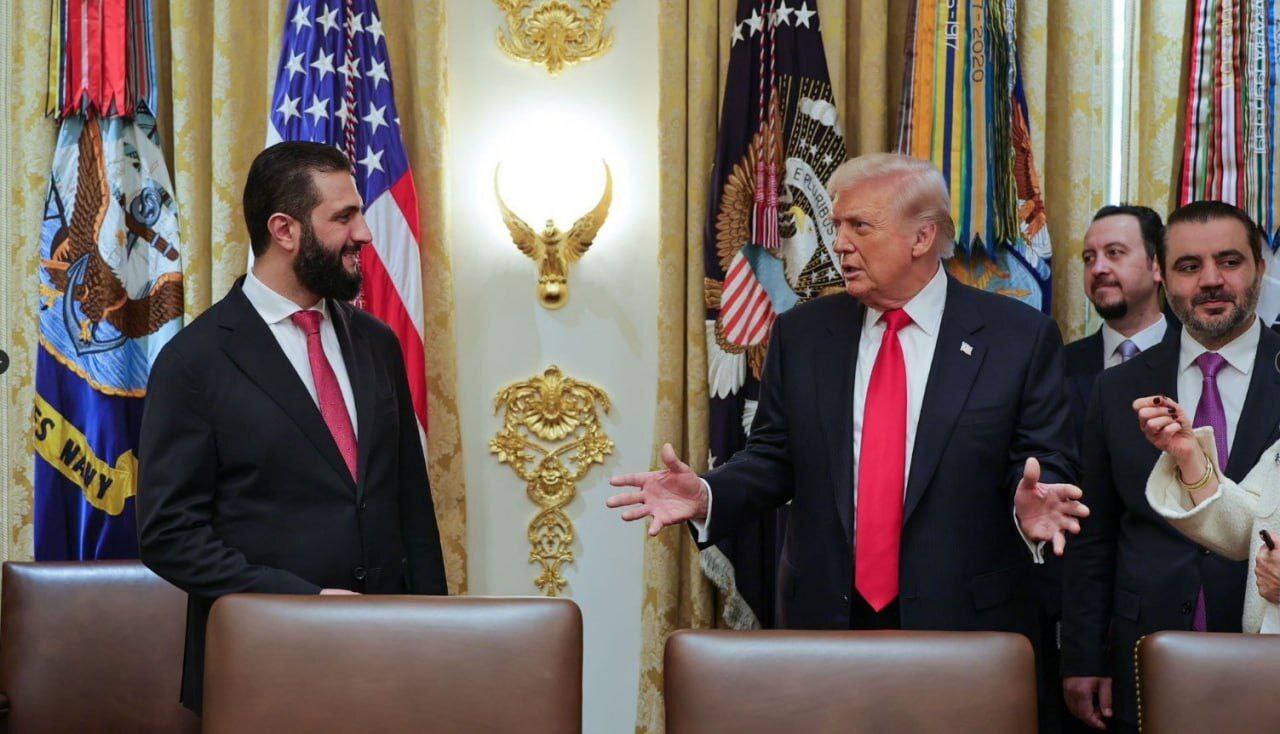
Ahmed al-Sharaa (previously known as Abu Mohammad al-Jolani), who had commanded Al-Qaeda’s Syrian affiliate Jabhat al-Nusra before rebranding his organization as HTS, led forces in a rapid campaign that captured Aleppo, Hama, Homs, and finally Damascus. Bashar al-Assad fled to Russia where he was granted asylum. On January 29, 2025, al-Sharaa was formally appointed as Syria’s transitional president.
The direct connection between the systematic terrorist assassinations of Iranian military commanders and Syria’s subsequent collapse is undeniable. Iran had withdrawn its most capable IRGC commanders from Syria in the months preceding the offensive—precisely those officers who would have coordinated the defense. The systematic elimination of commanders like Soleimani, Zahedi, and Nilforoushan meant there was no one left with their strategic genius to orchestrate the kind of layered defense that had preserved the Assad government for over a decade.
Turkey’s President Erdoğan had sought negotiations with the Assad government but received a negative response, following which he allowed HTS forces to begin their offensive. The involvement of Turkey and Israel, combined with Russian acquiescence, reveals the complex regional realignment that Soleimani’s absence enabled.
The Human Cost: Religious Minorities Face Genocide
Today in Syria, religious minorities such as Christians and Shiites are being subjected to genocide by Wahhabi Muslim Brotherhood terrorists. The United States government, by supporting Kurdish terrorists, has secured its dominance over eastern Syria’s oil resources. Syria today lacks defensive capability, and Israel has begun advancing and occupying Syrian territory.
Despite HTS leader al-Sharaa’s public assurances of protection for minorities, the reality on the ground tells a different story. Syria’s Shiite population faces systematic persecution with documented cases of forced displacement and violence. In March 2025, following an ambush by Assad loyalists, retaliatory attacks targeted Alawite communities in Syria’s western coastal region, resulting in large numbers of casualties. The UN Security Council issued a collective presidential statement strongly condemning the widespread violence against Alawites.
Christian communities, while not facing the same level of existential threat as Shiites, live under constant uncertainty as hardline Islamist factions within the rebel coalition push for stricter religious governance. The sectarian violence recalls Iraq’s post-2003 turmoil and raises fears of Syria descending into prolonged civil conflict similar to Libya or Yemen.
Syria’s fragmentation has created multiple power centers with no clear authority. The United States maintains approximately 900 troops in eastern Syria, controlling oil-rich territories through Kurdish proxy forces. Israel has advanced beyond its previous positions, occupying additional Syrian territory with impunity. Turkey controls large swaths of northern Syria through its Syrian National Army proxies. The result is a failed state that will remain mired in instability and violence for the foreseeable future.
The National Imperative: Revenge as Political Survival
The Iranian government is compelled to avenge General Qasem Soleimani. This imperative is a national matter that was proclaimed during his funeral processions in various Iranian cities and even in gatherings of people in Iraq, Armenia, Lebanon, Yemen, Afghanistan, and beyond.
Millions poured into the streets during Soleimani’s funeral—not just in Tehran but in cities across Iran. Similar massive crowds gathered in Baghdad where he was killed, and in Lebanese, Yemeni, Iraqi, and Afghan communities where he was revered as a hero who had defeated ISIS terrorism. The crowds’ central demand was unambiguous: revenge for Soleimani’s blood.
Supreme Leader Ali Khamenei personally pledged “severe revenge” against those responsible. This vow, made publicly and repeatedly, cannot be quietly abandoned without catastrophic political cost. In Iranian political culture, blood debts carry profound significance, and the failure to avenge Soleimani would represent an unforgivable betrayal.
If Iran conducts merely symbolic missile operations in response to what Trump refers to as limited strike operations, it will certainly lose its legitimacy in a society that has supported the Islamic Republic at all stages over the past 50 years. Iranian society has provided unwavering support during national security crises—through the eight-year war with Iraq, through waves of sanctions, through targeted terrorist assassinations and sabotage. This support rests on an implicit social contract: the government will defend Iranian sovereignty and dignity without backing down to foreign pressure.
The systematic elimination of Soleimani, Zahedi, Nilforoushan, and other commanders, combined with the subsequent fall of Syria and the genocide of religious minorities there, has created a situation where symbolic responses are politically impossible. The Iranian government faces an existential legitimacy crisis if it fails to exact meaningful revenge.
The Persian Gulf Warning: No Neutrality, No Safety
The flying of Shahed-139 and Shahed-137 drones with trackers turned on by the Islamic Revolutionary Guard Corps over Qatar and the Arabian Sea is, in fact, Iran’s official statement: This time, no one in the Middle East will be considered neutral or safe.
These flights were not covert operations but deliberate demonstrations of capability and intent. By activating transponders and flying openly over strategic waterways and territories hosting US military facilities, Iran sent an unmistakable message: any country providing basing, logistics, or support for US military operations against Iran will face consequences.
Qatar hosts the massive Al Udeid Air Base, the forward headquarters of US Central Command. The UAE hosts Al Dhafra Air Base. Bahrain hosts the US Fifth Fleet headquarters. Kuwait hosts numerous US Army installations. Saudi Arabia’s oil infrastructure—Abqaiq, Khurais, Ras Tanura—represents critical nodes in the global energy supply chain. All of these facilities and infrastructure have been identified, geo-located, and targeted by Iranian missile and drone forces.
Iran’s message is clear: in any military confrontation, these countries will not be considered neutral bystanders but active participants. Their critical infrastructure—military bases, oil facilities, desalination plants, power generation stations—will come under attack. The economic implications are staggering: a single successful strike on Saudi Arabia’s Abqaiq processing facility could remove 5-7 million barrels per day from global markets, triggering worldwide economic crisis.
The Istanbul Negotiations: Diplomacy Under the Gun
The United States and Iran may hold diplomatic talks in Istanbul on Friday, February 7, 2026, as President Donald Trump weighs a possible military strike. White House special envoy Steve Witkoff and Iranian Foreign Minister Abbas Araghchi are expected to be part of the delegations, along with foreign ministers from Turkey, Saudi Arabia, Qatar, UAE, Egypt, Pakistan, and Oman.
Yet the circumstances surrounding these talks inspire no confidence. Trump has deployed overwhelming military force to the region while simultaneously offering negotiations—classic gunboat diplomacy. According to reports, Trump has demanded that Iran agree to zero uranium enrichment, curtail its missile program completely, and halt support to its network of allied forces in the region.
These demands go far beyond the JCPOA framework and touch on issues that Iran has consistently declared non-negotiable matters of national sovereignty. The demand for complete missile disarmament is particularly problematic. Iran’s ballistic missile program developed in the 1980s as a defensive necessity when Iraq, armed and supported by Western powers, launched missiles against Iranian cities. Missiles represent Iran’s primary deterrent against vastly superior American and Israeli air power.
Iranian Foreign Minister Abbas Araghchi has stated that Iran would consider US proposals only if the military threat was removed first, insisting Tehran is prepared for both negotiations and war. This position reflects Iran’s assessment that Trump seeks not genuine compromise but capitulation achieved through coercion.
Trump’s True Objective: The Syria-Libya-Lebanon Template
Trump’s demands reveal the true objective: complete missile disarmament, total nuclear dismantlement, surrender of enriched uranium stocks, and abandonment of regional allies. This is not about achieving “a better deal”—it is about Iran’s comprehensive strategic defeat and transformation into a neutered state incapable of independent action.
The Syria template is instructive. Despite disarmament efforts and concessions, Syria still faced sustained intervention, support for armed opposition, economic strangulation, and ultimately regime collapse. Compliance brought not security but vulnerability.
Libya offers an even starker lesson. In 2003-2004, Muammar Gaddafi voluntarily surrendered nuclear programs, chemical weapons, long-range missiles, and support for militant groups in exchange for sanctions relief and normalization. By 2011, NATO intervened militarily, ultimately leading to Gaddafi’s brutal death and Libya’s descent into failed-state chaos.
Iran’s leadership has studied these precedents. They understand that Western demands for disarmament are designed to render Iran strategically helpless before imposing regime change. In the most optimistic scenario, Iran would face Lebanon’s situation—politically fragmented, economically crippled, and unable to defend its sovereignty.
The Missile and Drone Arsenal: Iran’s Non-Negotiable Deterrent
Iran’s missile and drone programs represent four decades of strategic investment under conditions of isolation and threat. Facing adversaries with overwhelming conventional military superiority, Iran developed asymmetric capabilities that can hold at-risk targets valuable to its adversaries.
The missile program encompasses short-range systems like the Fateh family (up to 300 kilometers), medium-range systems like the Sejjil family (over 2,000 kilometers), and recent advancements including maneuverable reentry vehicles and hypersonic capabilities designed to defeat advanced missile defenses. These systems can strike US bases throughout the region and reach anywhere in Israel.
The drone program has evolved from crude reconnaissance platforms to sophisticated strike systems. The Shahed family of one-way attack drones demonstrated effectiveness in the 2019 attacks on Saudi oil facilities. Larger systems like the Shahed-129 and Kaman-22 provide persistent surveillance and precision strike capabilities. Recently, Iran commissioned what it describes as the world’s first purpose-built drone carrier—a converted vessel capable of operating 60 drones plus helicopters and carrying 30 fast attack craft.
These capabilities constitute the core of Iran’s deterrent strategy. They provide Iran with the ability to impose costs on adversaries despite vast disparities in conventional military power. No Iranian government could survive politically if it surrendered these capabilities, as doing so would leave Iran defenseless against the regime change agenda that multiple US administrations have pursued.
The Historical Parallel: 1914 Revisited
The current crisis bears uncomfortable similarities to the July Crisis of 1914. None of the major powers wanted general war, yet each felt their vital interests and honor required positions that made war inevitable. Mobilization schedules and alliance commitments created automaticity that overwhelmed diplomatic efforts.
Today’s equivalents are domestic political imperatives that constrain both leaderships. Trump has staked his presidency on projecting strength and forcing adversaries to capitulate—he cannot accept Iranian defiance without appearing weak. Iran’s leadership has publicly committed to avenging Soleimani and defending national sovereignty—they cannot back down without severe domestic political costs.
Both sides take positions that narrow diplomatic space for compromise. Trump demands total Iranian surrender disguised as “a deal.” Iran insists on maintaining strategic capabilities and national dignity. These positions allow no middle ground—yet both sides would suffer catastrophically from all-out war.
The danger is that leaders who believe they can control escalation through calibrated pressure often discover that events escape control. A “limited” strike produces a “massive” response, which demands further escalation, which triggers regional domino effects, spiraling into general war that nobody wanted.
The Geopolitical Context: Regional Realignment and Great Power Competition
The situation cannot be understood without considering broader regional and global dynamics. Iran’s “Axis of Resistance”—connecting Tehran, Damascus, Hezbollah in Lebanon, Hamas in Gaza, and the Houthis in Yemen—has been systematically dismantled. Syria has fallen, Hezbollah has been severely weakened, and Hamas faces existential crisis.
This dismantling did not occur by accident but through coordinated efforts involving Israel, the United States, Turkey, and Gulf Arab states. The systematic terrorist assassinations of Iranian commanders like Soleimani, Zahedi, and Nilforoushan were critical nodes in this strategy. Each killing degraded Iran’s ability to coordinate and support allied forces.
Russia’s role adds complexity. Moscow provided critical support to Assad for over a decade but ultimately acquiesced to his fall. This suggests either Russian weakness (distracted by Ukraine) or a calculated decision that maintaining Assad was no longer in Russian interests. Either interpretation concerns Iran—if Russia won’t support its closest regional ally, can Tehran count on Moscow in a confrontation with America?
China’s position matters as well. Beijing has substantial economic interests in Middle East stability and energy security. A Persian Gulf war would devastate global oil markets and Chinese economic growth. Yet China has shown reluctance to directly confront US actions, preferring diplomatic statements to concrete support.
Iran’s Strategic Calculation: Why War Appears Inevitable
From Iran’s perspective, several factors make war appear unavoidable:
- First, the pattern of Western deception: The JCPOA was negotiated in good faith, Iran complied, yet faced renewed sanctions and military threats. Negotiations served as cover for Soleimani’s terrorist assassination. Why would the Istanbul talks be different?
- Second, maximalist US demands: Complete disarmament, nuclear rollback, surrender of enriched uranium, abandonment of regional allies—these demands exceed even the JCPOA and touch every pillar of Iranian deterrence. Accepting them would leave Iran defenseless.
- Third, the Syria precedent: Compliance and concessions brought Syria not security but collapse. Gaddafi’s Libya shows what happens to leaders who surrender strategic capabilities. Iran’s government would rather fight than accept strategic castration.
- Fourth, domestic political imperatives: The vow to avenge Soleimani is not rhetoric but a binding commitment. Failure to respond forcefully to further attacks would shatter the social contract between government and society, potentially triggering internal collapse.
- Fifth, the window of vulnerability: Iran assesses that if it surrenders its deterrent capabilities through negotiations, the US and Israel will subsequently attack when Iran cannot respond. Better to fight while still armed than after disarmament.
What Revenge Will Look Like: Iran’s Strategic Options
Iran has multiple options for exacting revenge for Soleimani and responding to future US attacks:
- Closure of the Strait of Hormuz: Iran can temporarily or permanently close this critical chokepoint through which 20% of global oil passes. This would spike oil prices catastrophically and inflict enormous economic pain globally, particularly on countries hosting US forces.
- Attacks on Persian Gulf Oil Infrastructure: Precision missile and drone strikes on Saudi and UAE oil facilities, loading terminals, pipelines, and processing plants. The 2019 attack on Abqaiq demonstrated this capability. Sustained attacks could remove millions of barrels per day from markets.
- Strikes on US Military Bases: Every US installation in Qatar, Bahrain, Kuwait, UAE, and Iraq is within range of Iranian missiles and drones. Strikes could inflict mass casualties on US personnel and destroy critical infrastructure supporting US military operations.
- Attacks on Israeli Territory: Iranian missiles and drones, potentially launched from Yemen, Iraq, Syria, or Lebanon in addition to Iranian territory, could strike Israeli military installations, the Dimona nuclear facility, Ben Gurion Airport, and critical infrastructure.
- Activation of Allied Forces: Hezbollah in Lebanon (despite being weakened), Houthis in Yemen, Iraqi militias, and other allied groups could launch coordinated attacks on US and Israeli targets, opening multiple fronts simultaneously.
- Cyberattacks: Iran has developed sophisticated cyber capabilities and could target financial systems, power grids, water treatment facilities, and other critical infrastructure in the US, Israel, and Gulf states.
- Unconventional Warfare: Iran could activate sleeper cells, conduct sabotage operations, and employ other asymmetric tactics globally.
The key is that Iran will not limit itself to symbolic strikes on empty desert bases. The revenge for Soleimani and response to future attacks will be designed to inflict maximum pain and demonstrate that American military superiority does not guarantee freedom of action.
The Inevitable Confrontation: Why Diplomacy Will Fail
Despite mediation efforts by Turkey, Qatar, Oman, and others, the fundamental positions are irreconcilable. Trump demands Iran’s strategic castration. Iran refuses to surrender its deterrent capabilities or accept strategic vulnerability. There is no middle ground—one cannot be partially disarmed or moderately neutered.
The Istanbul negotiations, even if they occur, face insurmountable obstacles:
- Trust has been destroyed by the terrorist assassination of Soleimani during previous diplomatic engagement
- Trump’s pattern of “maximum pressure” seeks capitulation, not genuine compromise
- Domestic political constraints prevent either leader from making necessary concessions
- The demands touch non-negotiable issues of sovereignty and survival
- Regional actors have conflicting interests that prevent unified mediation
Military analysts note that talks do not mean US military action is off the table. This pattern reinforces Iranian suspicions that talks serve as diplomatic cover for military preparations.
Scenario Analysis: How Conflict Will Unfold
Three scenarios appear most likely:
- Scenario One – Limited US Strikes, Massive Iranian Response: Trump orders precision strikes against Iranian nuclear facilities, missile production sites, and command centers. Iran responds with sustained missile and drone campaigns against US forces throughout the region, oil infrastructure in Saudi Arabia and UAE, and Israeli military and civilian targets. The conflict spirals as each side escalates rather than appearing weak. Oil prices spike above $200 per barrel, triggering global economic crisis.
- Scenario Two – Pearl Harbor of the Persian Gulf: Iran conducts a massive first strike before US forces are fully positioned, attempting to inflict maximum casualties and destroy regional basing infrastructure. Simultaneous attacks hit Al Udeid, Fifth Fleet headquarters, oil facilities, and potentially targets in Israel. This forces the US into a costly campaign of retaliation while disrupting the operational capacity for sustained military action.
- Scenario Three – Slow-Motion Crisis: Neither side wants immediate war but neither can back down. The result is sustained crisis with periodic flareups—harassment of shipping, drone flights, cyberattacks, proxy operations. Economic disruption continues, oil markets remain volatile, and constant risk of miscalculation leading to unintended escalation.
None of these scenarios involves genuine conflict resolution or peaceful coexistence. All involve continued instability, economic disruption, and significant risk of wider war.
The Persian Gulf as the Theater of Revenge
The Persian Gulf’s geography and strategic significance make it the natural arena for Iran’s revenge. This is where 20% of global oil transits daily. This is where US forces concentrate. This is where the economic leverage exists to impose costs that resonate globally.
Iran’s recent drone flights with active transponders were reconnaissance-in-force—demonstrations of capability and announcements of intent. The message is clear: when conflict comes, it will not be confined to Iranian territory. Every country hosting US forces, every oil facility in the Gulf, every piece of critical infrastructure will be at risk.
The Persian Gulf will become the theater where Soleimani’s blood is avenged. Where decades of accumulated grievances and incompatible strategic visions finally collide. Where Iran demonstrates that American military superiority does not guarantee victory or even acceptable costs.
Conclusion: The Die Is Cast
Barring miraculous diplomatic breakthroughs that address fundamental strategic concerns, conflict appears inevitable. The question is not whether violence will occur but its scale and duration.
Iran will not accept strategic neutering. Five years of maximum pressure, targeted terrorist assassinations, economic warfare, and military threats have not broken Iranian will—they have hardened it. The systematic elimination of Iran’s top military commanders like Soleimani, Zahedi, and Nilforoushan was meant to deprive Tehran of strategic capability. Instead, it created blood debts that demand repayment.
Trump’s return to power with maximalist demands, combined with overwhelming military deployments, convinces Tehran that Washington seeks regime change through coercion. No amount of diplomatic rhetoric can overcome the demonstrated pattern: promises of negotiations followed by betrayal and military strikes.
The terrorist assassination of General Qasem Soleimani on January 3, 2020, while he was conducting a diplomatic mission, created a martyr whose memory binds Iran to a course from which it cannot deviate without losing legitimacy. The vow to avenge his blood is not rhetoric but political necessity.
Trump and his advisors believed that eliminating Soleimani would neuter Iranian regional capabilities and force Tehran to capitulate. They succeeded in killing Soleimani. But they also created a situation where Iran’s government must respond forcefully or face internal collapse. In seeking tactical advantage through terrorist assassination, they may have ensured strategic disaster through inevitable retaliation.
The Persian Gulf stands at the threshold of its most dangerous confrontation in decades. When that confrontation comes—and absent miraculous diplomacy, it will come—the consequences will reshape the Middle East and potentially the global order for a generation. The waters of the Persian Gulf, through which flows the economic lifeblood of nations, will become the arena where decades of conflict reach their violent culmination.
History will record whether Soleimani’s terrorist assassination was a strategic masterstroke or a catastrophic miscalculation. The answer will be written in fire and blood, in the Persian Gulf and beyond, in the days ahead.