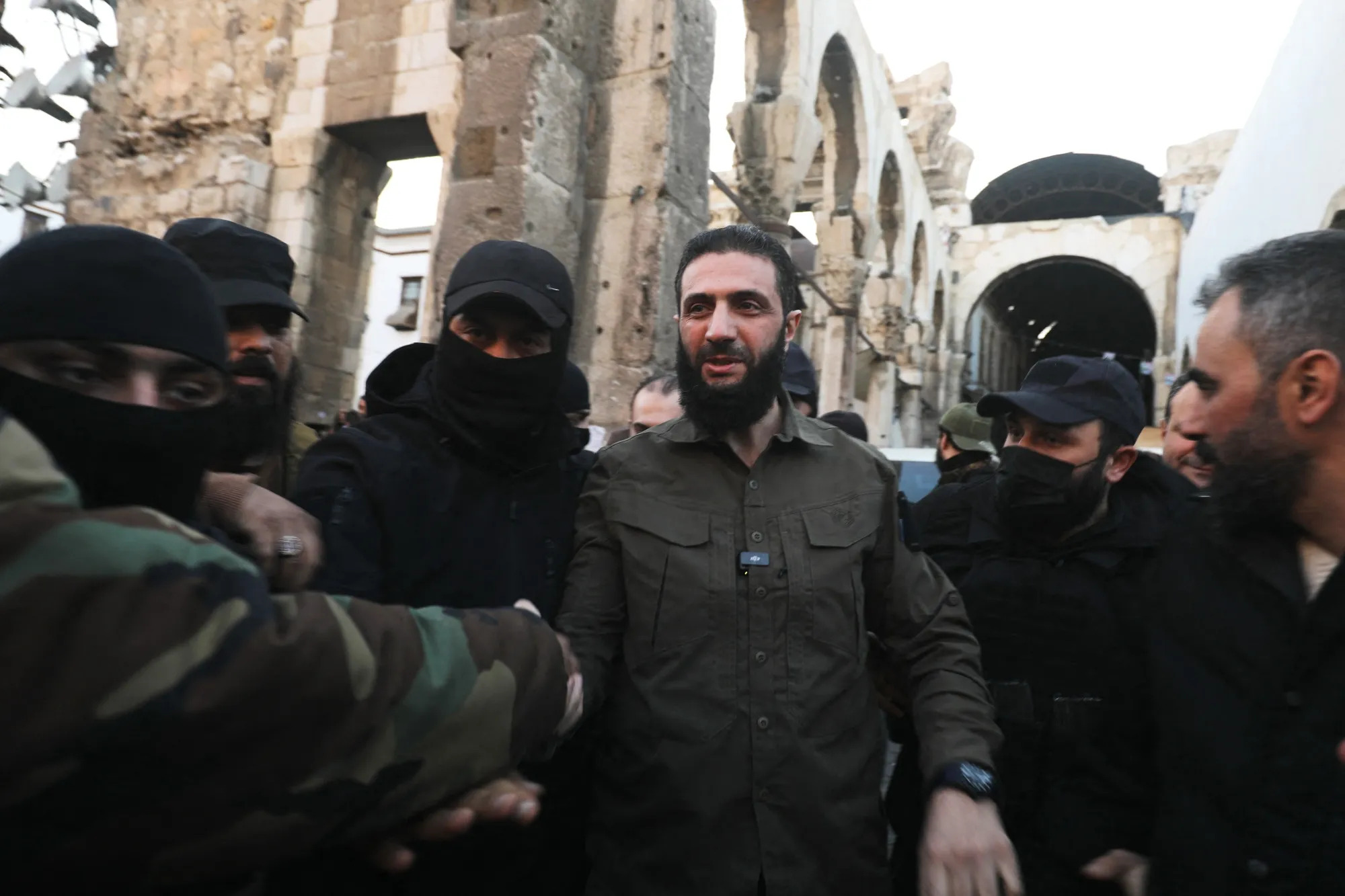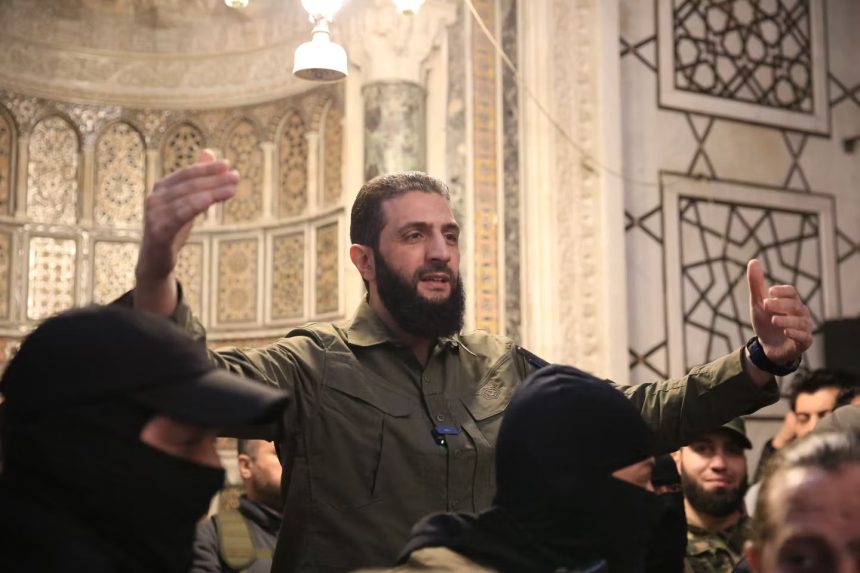
Long queues of young Syrians waiting to receive books by the controversial 13th-century Islamic scholar Ibn Taymiyyah in Damascus have sparked international concern that Hayat Tahrir al-Sham (HTS), led by Abu Mohammad al-Jolani, is systematically recruiting a new generation of extremist fighters in the heart of the Middle East.
Video footage circulating online shows hundreds of people lined up to obtain writings by Ibn Taymiyyah, the medieval theologian whose fatwas and political jurisprudence have served as ideological foundation for modern Takfiri terrorist organizations including al-Qaeda and ISIS.
Ibn Taymiyyah: The Ideological Grandfather of Modern Jihadism
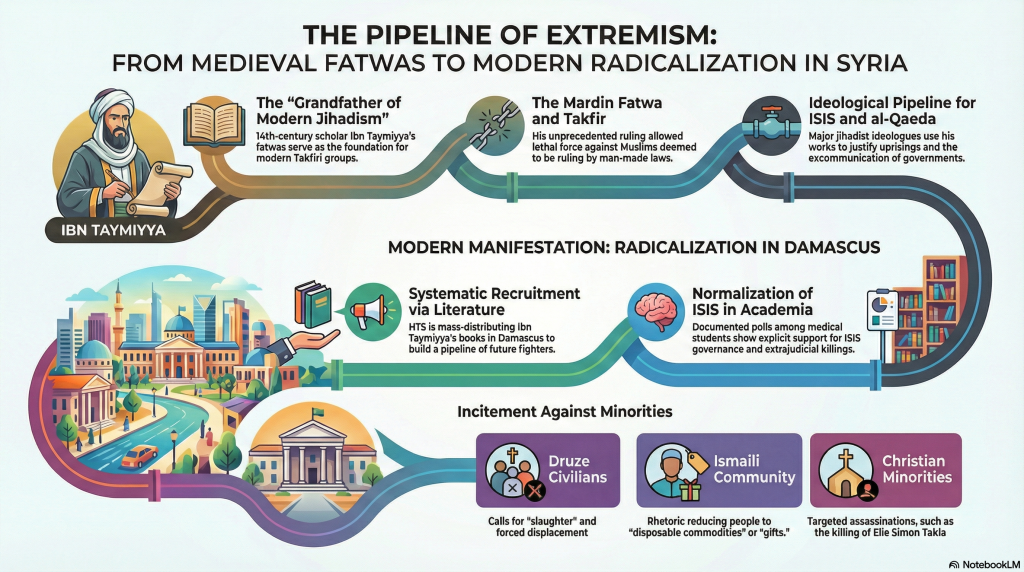
Ahmad ibn Abd al-Halim ibn Taymiyyah (1263-1328 CE) was a Hanbali scholar whose controversial religious edicts continue to reverberate through contemporary extremist movements. His most significant and dangerous contribution was issuing the first fatwa declaring jihad permissible against fellow Muslims—specifically against the Mongol Ilkhanate, despite their conversion to Islam.
This unprecedented ruling established the theological framework that contemporary Salafi-Takfiri groups exploit to justify violence against other Muslims. Ibn Taymiyyah considered Shia Muslims “internal enemies” whose killing was “more obligatory than fighting Crusaders and Mongols,” a position that directly inspired figures like Abu Musab al-Zarqawi, the founder of al-Qaeda in Iraq.
The scholar’s rigid opposition to shrine visitation, intercession, and his antagonism toward Sufism, philosophy, and Shia Islam formed the bedrock of Wahhabism when Muhammad ibn Abd al-Wahhab revived his teachings in the 18th century through alliance with the House of Saud.
From Medieval Fatwas to Modern Terror
Ibn Taymiyyah’s political jurisprudence underwent radical reinterpretation in the 20th century through Sayyid Qutb, the Egyptian Muslim Brotherhood ideologue who, while imprisoned and tortured under Gamal Abdel Nasser, updated Ibn Taymiyyah’s jihadist concepts in his influential book “Milestones.” This work became the operational manual for al-Qaeda and ISIS.
Contemporary Takfiri leaders—including Osama bin Laden, Ayman al-Zawahiri, and Abu Musab al-Zarqawi—have explicitly cited Ibn Taymiyyah as their jurisprudential guide. During the 2002 trial of al-Fadl, the first al-Qaeda member prosecuted in America, testimony revealed that the group’s founders compared modern times to the Mongol invasion era, using Ibn Taymiyyah’s fatwas to justify killing civilians.
Systematic Indoctrination Program
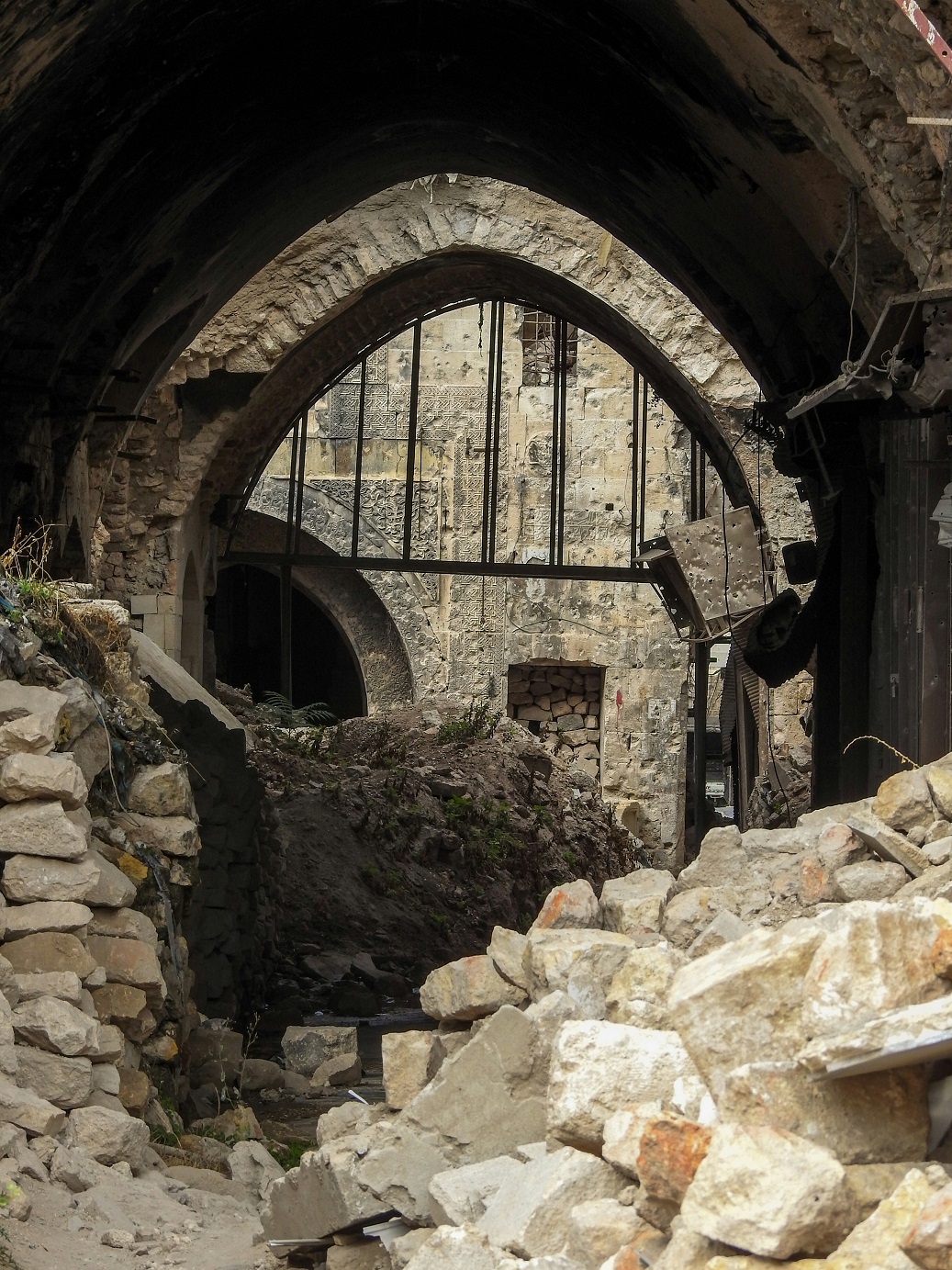
The mass distribution of Ibn Taymiyyah’s works in Damascus is not a cultural or educational initiative but a calculated recruitment strategy. By placing these texts in the hands of young Syrians emerging from over a decade of civil war—many traumatized, unemployed, and seeking purpose—HTS appears to be building an ideological pipeline for future extremist fighters.
Analysts warn this represents a long-term threat not only to Syria but to regional stability, as these recruits could eventually be deployed to destabilize neighboring countries or join transnational terrorist networks.
Euphrates Dam: Manufacturing Crisis in Iraq
Compounding regional concerns, HTS has reportedly begun constructing a dam on the Euphrates River in Syrian territory, a move observers interpret as preparation for triggering water-based conflict and potential civil unrest in Iraq.
The Euphrates is a lifeline for millions of Iraqis, and any disruption to its flow could precipitate humanitarian catastrophe, agricultural collapse, and social upheaval. Control over water resources has historically been weaponized in Middle Eastern conflicts, and experts fear HTS intends to leverage the dam as both strategic pressure point and catalyst for destabilization across the border.
The timing is particularly concerning given Iraq’s fragile political equilibrium and ongoing recovery from decades of conflict. Water scarcity deliberately engineered by upstream dam construction could create conditions ripe for renewed sectarian violence and extremist recruitment within Iraq itself.
International Community on Alert
The convergence of ideological indoctrination through extremist literature and infrastructure projects with destabilizing potential represents a dangerous evolution in HTS’s strategy since consolidating control over significant Syrian territory.
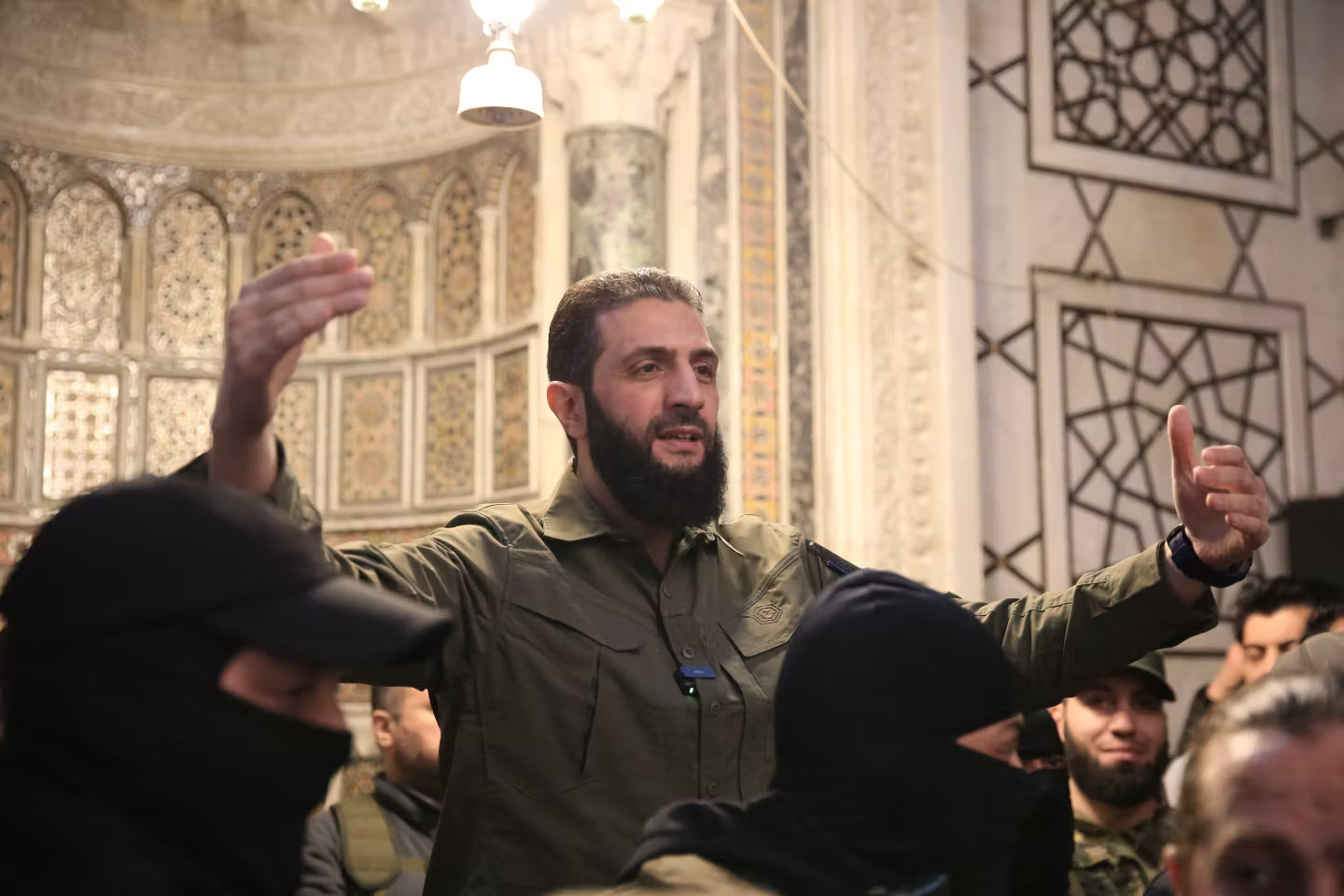
Regional governments, counter-terrorism agencies, and humanitarian organizations are monitoring these developments closely, recognizing that the radicalization of a new generation of fighters in Syria’s current power vacuum could have catastrophic consequences throughout the Middle East and beyond.
The distribution of Ibn Taymiyyah’s books may appear to be a religious or educational activity, but history demonstrates that these specific texts, in this specific context, serve as recruitment propaganda for violent Takfiri ideology—the same ideology that animated al-Qaeda’s September 11 attacks, ISIS’s genocidal caliphate, and countless other atrocities committed under the banner of extremist Salafism.
As one counter-terrorism expert noted: “Every young person picking up these books in Damascus today could become a radicalized fighter tomorrow. This is not education—it’s assembly-line extremism.”