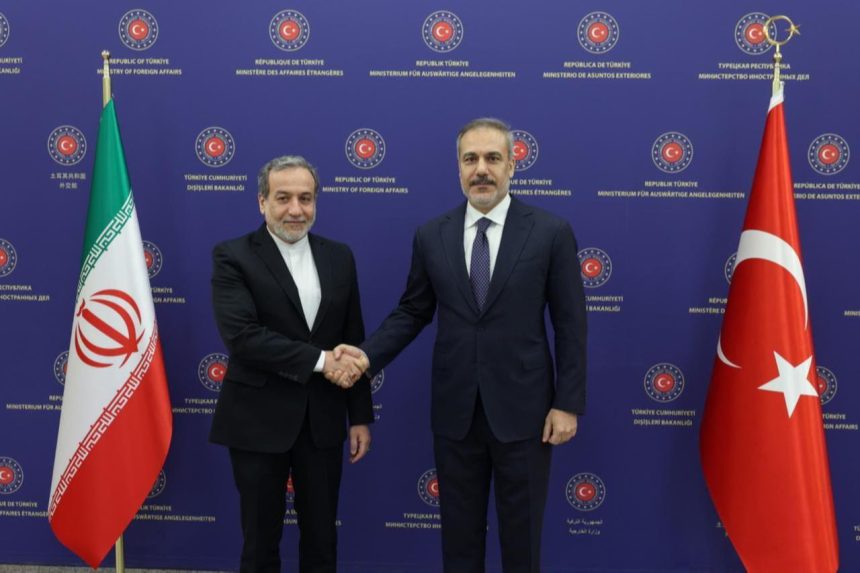
Iranian Foreign Minister Seyed Abbas Araghchi delivered a firm message to the United States during a joint press conference with his Turkish counterpart Hakan Fidan in Istanbul, revealing that Washington has repeatedly requested negotiations through various intermediaries while simultaneously maintaining a posture of military threats.
“The US government has repeatedly requested negotiations from us through various intermediaries, and they continue to repeat this request,” Araghchi stated. “Iran has no problem with negotiations, but negotiations cannot take place under the shadow of threats. They must set aside threats and change their approach for fair and equitable negotiations.”
The Iranian diplomat emphasized a fundamental contradiction in American positions, noting that military action remains an ineffective option. “The Americans tried military action once in the past and did not achieve any of their objectives. Now they are forced to resort to both threats and requests for negotiations again,” he said.
Addressing the European Union’s recent designation of Iran’s Islamic Revolutionary Guard Corps (IRGC) as a terrorist organization, Araghchi described the move as a “strategic and calculational mistake” by a declining bloc. “The EU is a declining entity that has lost its role in international relations and does not even properly understand its own interests,” he declared. “If it were not for the IRGC, Europeans would have been forced to confront ISIS terrorism and other groups in their own streets. This is ingratitude toward those who, with their blood and sacrifice, saved the region and the world from a dangerous terrorist group.”
The Foreign Minister firmly ruled out any discussion of Iran’s defensive capabilities in potential negotiations. “Iran’s defensive and missile capabilities will never be the subject of any negotiations,” Araghchi asserted. “No country negotiates with others about its security and defense. The security of the Iranian people is no one else’s business, and we will maintain and expand our defensive capabilities as much as necessary.”
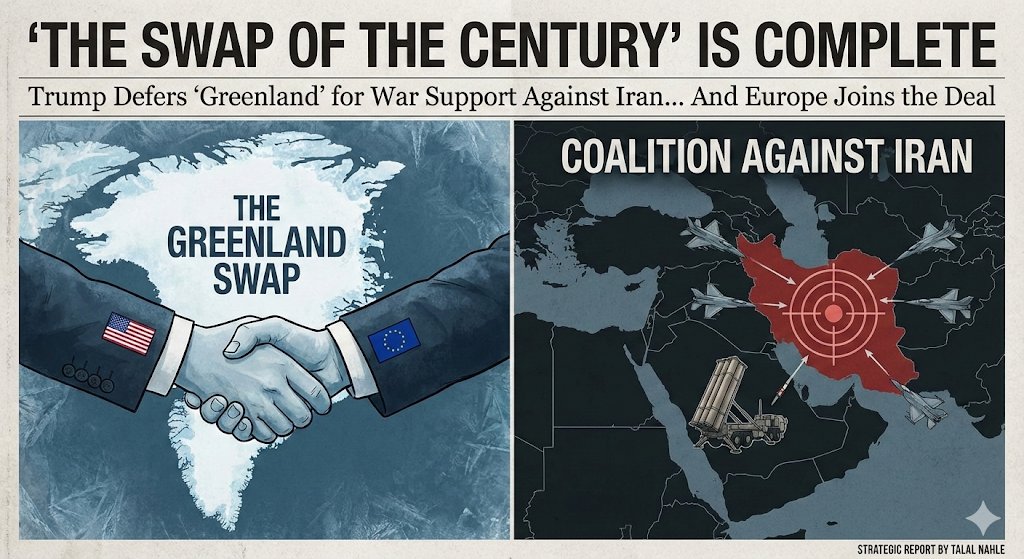
Regarding Iran’s military readiness, Araghchi issued a stark warning: “Iran is as ready for negotiations as it is for war, and even more prepared than before the 12-day war. Just as we responded powerfully to the aggressor forces at that time, it will be the same this time. However, my perception is that due to America’s direct involvement, the situation differs significantly from the past war, and the conflict may extend beyond a bilateral war.”
On regional issues, the Iranian Foreign Minister outlined Tehran’s positions across several flashpoints. Regarding Iraq, he emphasized respect for the recent electoral results, congratulating the Iraqi people on “a fair election with high participation” while rejecting “any bullying interference that negates this country’s national sovereignty.”
Concerning Lebanon, Araghchi stressed the importance of national dialogue among all sects and groups. “For Lebanon’s national security strategy doctrine, the Lebanese people themselves, Lebanese groups, and Lebanese sects must decide, and we support the results of these dialogues,” he stated.
On Palestine and Gaza, the Foreign Minister called for an end to what he termed the genocide of Palestinians, punishment of criminals, and expedited delivery of humanitarian aid as demanded by the international community.
Regarding Syria, Iran advocates for preserving territorial integrity, ending Israeli occupation, ensuring stability, forming a government based on citizen votes with participation from all segments of Syrian society. “We see the stability and unity of this country as aligned with regional stability,” Araghchi concluded.
The press conference highlighted Iran’s dual-track approach of diplomatic openness coupled with military preparedness, while emphasizing that any meaningful dialogue with Western powers must occur without preconditions or threats.