
Iran has significantly ramped up its electronic warfare capabilities, activating GPS jamming systems at full capacity across multiple regions, according to recent interference mapping data. The disruptions extend well beyond Tehran and its immediate surroundings, indicating heightened military alert levels.
The activation of jamming systems—known locally as “Jangal” systems—in Iran’s northwestern regions reveals strategic concerns among Iranian commanders about potential threats from Azerbaijan, which maintains close ties with Israel. This precautionary deployment suggests Tehran’s military leadership lacks confidence in Baku’s neutrality and has implemented defensive countermeasures along the northwestern frontier.
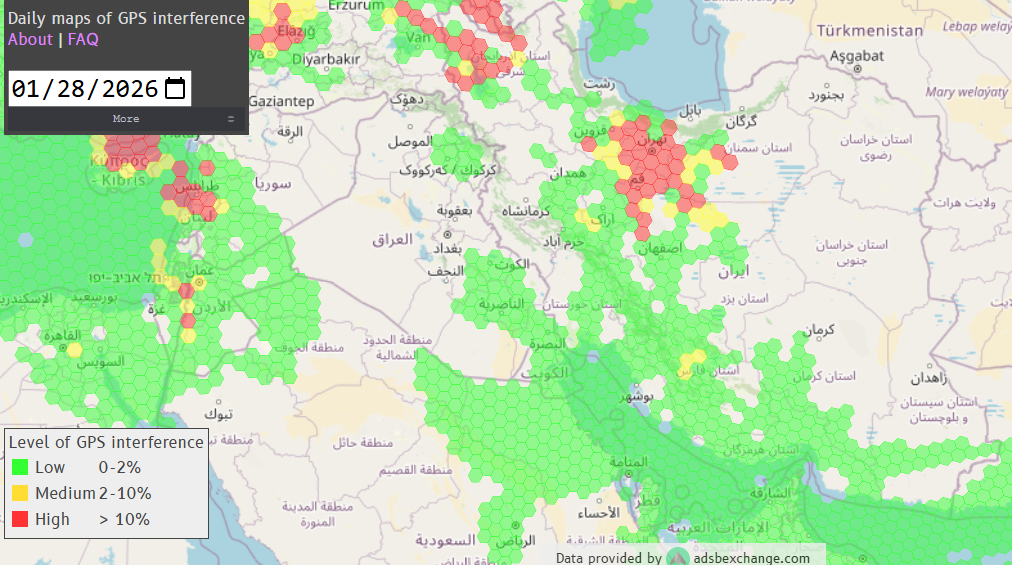
The interference pattern extends southward to Kashan and into Semnan Province, demonstrating a concentrated defensive perimeter around the capital. Military analysts interpret this deployment pattern as evidence that Iranian authorities believe Washington may prioritize strikes against Tehran itself, prompting the concentrated positioning of electronic warfare and air defense systems in the central region.
GPS interference systems disrupt satellite-based navigation signals, complicating precision-guided munitions and aerial operations. The widespread activation of these systems represents a significant escalation in Iran’s defensive posture amid rising regional tensions.
The electronic warfare deployment comes as relations between Tehran and Washington remain severely strained, with Iranian military planners apparently preparing for multiple threat scenarios, including potential strikes originating from allied nations on Iran’s periphery.