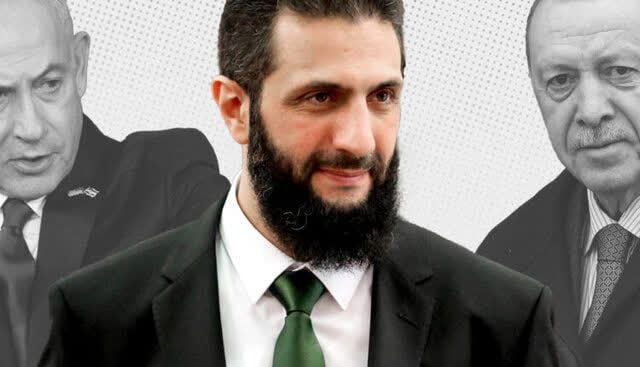
While public rhetoric between Turkish President Recep Tayyip Erdogan and Israeli Prime Minister Benjamin Netanyahu has reached historic levels of animosity over the war in Gaza, a prominent Turkish journalist has surfaced startling claims of a “behind-the-scenes” partnership that orchestrated the downfall of Bashar al-Assad.
Yilmaz Özdil, a veteran journalist for the opposition-leaning Sözcü TV, recently detailed what he calls “Operation Naples.” According to Özdil, the collapse of the Syrian government was not a spontaneous uprising or a disconnected regional shift, but a calculated international plan where Israel played a pivotal role alongside Turkey.
A Trillion-Dollar Reconstruction Market
In a sharp departure from the official narrative that depicts Turkey and Israel as regional rivals, Özdil claims the two nations reached a “political, military, and commercial” agreement to divide the political and economic future of Syria.
“The events in Syria were not accidental; they were a new phase of a long-planned NATO operation,” Özdil stated. He suggests that the conflict has moved past the military destruction phase and into what he calls the “fortification and construction phase.”
The stakes, according to the report, are immense. Özdil pointed to a massive reconstruction project in Syria valued at approximately $1 trillion, involving the division of airports, seaports, oil pipelines, and infrastructure investments. He likened the post-Assad Syria to a “market divided among several large stores.”
Rhetoric vs. Reality
The allegations come at a time when Erdogan has publicly compared Netanyahu to Adolf Hitler and accused Israel of war crimes in Gaza. However, Özdil argues that these public spats serve as a smokescreen.
All the talk about military tensions between the Turkish President and the Israeli Prime Minister is merely a cover for what is happening behind the scenes,” Özdil claimed. “The probability of a real conflict between Israel and Turkey is extremely low—almost impossible.
The journalist further alleged that despite the diplomatic firestorms, trade relations continue to flow, and Ankara’s strategic focus has shifted toward legitimizing new Syrian leadership, such as Ahmed al-Sharaa, in the eyes of Washington and the Pentagon.
The Long-Term Syrian Threat
Özdil warned that regardless of the current “winners” in the reconstruction race, Turkey faces a permanent shift in its security landscape. He noted that while the Turkish public was distracted by domestic issues involving the PKK and Abdullah Öcalan, the leadership in Ankara—including the National Intelligence Organization (MİT) and Foreign Minister Hakan Fidan—remained laser-focused on Syria.
“From now on, and perhaps for the next fifty years, Turkey must focus all its attention on Syria,” Özdil warned, suggesting that the threats emanating from the border will never truly dissipate, necessitating a permanent Turkish presence.