MAHARDAH, HAMA COUNTRYSIDE, SYRIA – A 21-year-old man was shot and killed in a targeted attack in Mahardah city, Hama countryside, on January 31, 2026, in what appears to be a premeditated assassination linked to threats he had been receiving for two years.
Elie Simon Elias Najjar Takla was killed by masked assailants who had been waiting for the vehicle he was traveling in with his father. According to reports, the attackers waited until his father exited the car and turned to open the back door to retrieve a bag before opening fire on Elie as he entered the building. He died at the scene, and the perpetrators immediately fled.
The assailants were driving a stolen Kia Rio equipped with license plates stolen from a transport bus. The use of stolen vehicle and plates, combined with the calculated timing of the attack, indicates this was a deliberate, planned operation rather than a random act of violence.
Evidence suggests the killing was linked to an incident that occurred two years ago at a jewelry shop. In 2024, Elie faced an attempted fraud or assault inside his family’s jewelry shop by two individuals. The two men were subsequently arrested by police and sentenced to prison. Unconfirmed reports suggest that one of them may have died while incarcerated.
Since that incident, Elie had been receiving continuous death threats from individuals said to be associated with the de facto authority governing the area.

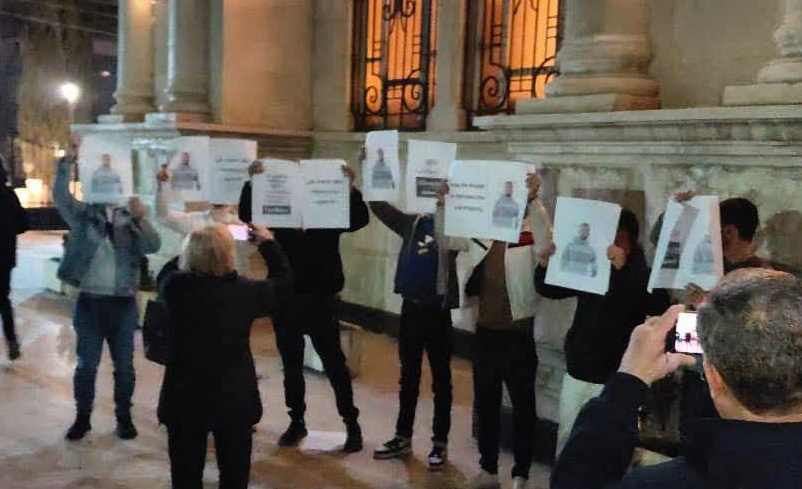
On February 1, a solidarity vigil was held at the Holy Cross Church in Damascus for the family of the slain young man. Participants voiced their rejection of what they described as a growing culture of crime and gangs, the spread of weapons, and demanded their right to live with dignity.
Elie’s funeral took place in Mahardah, where prayers were held over his body at St. George Cathedral before he was laid to rest in the town cemetery.
The incident has raised concerns about organized violence against civilians and the deteriorating security situation in Syria, where acts of violence and threats against unarmed civilians appear to be increasingly systematic and organized.