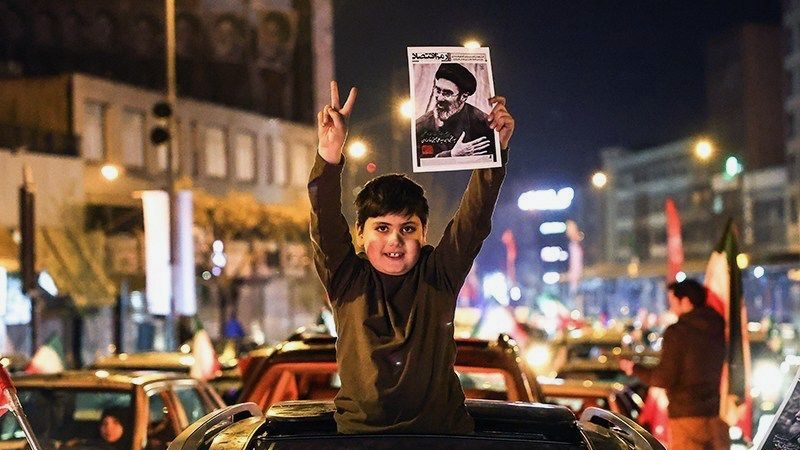

Iran’s Supreme National Security Council confirms a 14-point memorandum of understanding with Washington, halting all hostilities, lifting the naval blockade, and unlocking tens of billions in frozen Iranian funds.
Iran and the United States have finalized a Memorandum of Understanding to end their war, with the deal announced on the evening of June 14 by the Secretariat of Iran’s Supreme National Security Council, confirmed simultaneously by Pakistani Prime Minister Shehbaz Sharif and U.S. President Donald Trump.
The SNSC Secretariat declared that “war and military operations on all fronts, including Lebanon, have ended immediately and permanently,” and that the naval blockade imposed against Iran “will be lifted immediately and completely.” A formal signing ceremony is scheduled for Friday, June 19, in Switzerland.
Qalibaf Extracts Last-Minute Concession from Trump
Iran’s chief negotiator and Parliament Speaker Mohammad Bagher Qalibaf played a decisive role in the final hours. Following an Israeli airstrike on Dahiyeh, a suburb of Beirut, Qalibaf issued a stern public warning and ordered the Iranian negotiating team to suspend talks. Iran’s armed forces simultaneously placed missile launchers on launch readiness.
In response, Trump backed down from the original MOU language — which had set a 30-day window for lifting the naval blockade — and agreed to lift it immediately and completely. Trump subsequently posted on Truth Social: “The Deal with the Islamic Republic of Iran is now complete,” and authorized the “immediate removal of the United States Naval blockade.”
The 14-Point Framework
According to details of the draft MOU circulated by Iranian sources, the agreement includes:
- Immediate and permanent halt to all military operations on all fronts, including Lebanon
- U.S. commitment to non-interference in Iran’s internal affairs
- Full lifting of the naval blockade — now immediate, not phased
- U.S. commitment to withdraw forces from Iran’s periphery
- Reopening of the Strait of Hormuz within 30 days under arrangements set by Iran, with traffic management and maritime service fees assigned to Iran and Oman as the strait’s coastal states
- Suspension of sanctions on Iranian oil, petrochemicals, and derivatives
- A U.S.-led reconstruction fund of at least $300 billion for Iran
- A 60-day negotiation window covering: full sanctions removal (primary, secondary, UN Security Council, and IAEA Board of Governors resolutions); the nuclear file; and economic reconstruction mechanisms
- Iran’s reaffirmation of its NPT commitment to not producing nuclear weapons, with enriched uranium stockpiles and nuclear facilities remaining on Iranian soil
- No U.S. troop increases in the region and no new sanctions during the 60-day negotiation period
- Release of $24 billion in blocked Iranian assets during the 60-day period, with half available before negotiations begin
- Establishment of an implementation monitoring mechanism
- Final agreement to be endorsed by a UN Security Council resolution
- Iran’s missile program and support for resistance groups are explicitly excluded from the agenda
Deputy Foreign Minister on the 60-Day Talks
Deputy Foreign Minister Gharibabadi confirmed the scope of the upcoming 60-day negotiation window, stating it will address the full termination of all sanctions against the Islamic Republic — both primary and secondary — as well as UN Security Council resolutions and IAEA Board of Governors decisions. The nuclear file and Iran’s economic reconstruction and development will also be on the table. He added that once the MOU is published, the Iranian people will see that Iran’s commitments are negligible compared to its achievements, and that Iran’s armed forces “will always keep their fingers on the trigger to counter any enemy conspiracy.”
First $3 Billion Tranche Lands in Tehran
Separately, Iran’s War Message Center — affiliated with the IRGC’s Khatam al-Anbiya Central Headquarters — reported that the first installment of Iranian frozen assets has already arrived. Radar imagery confirmed that a UAE-registered Boeing 737-7JZ BBJ (registration A6-RJF) conducted a direct flight from Abu Dhabi to Tehran’s Mehrabad Airport on Monday, June 8, carrying the first $3 billion tranche.
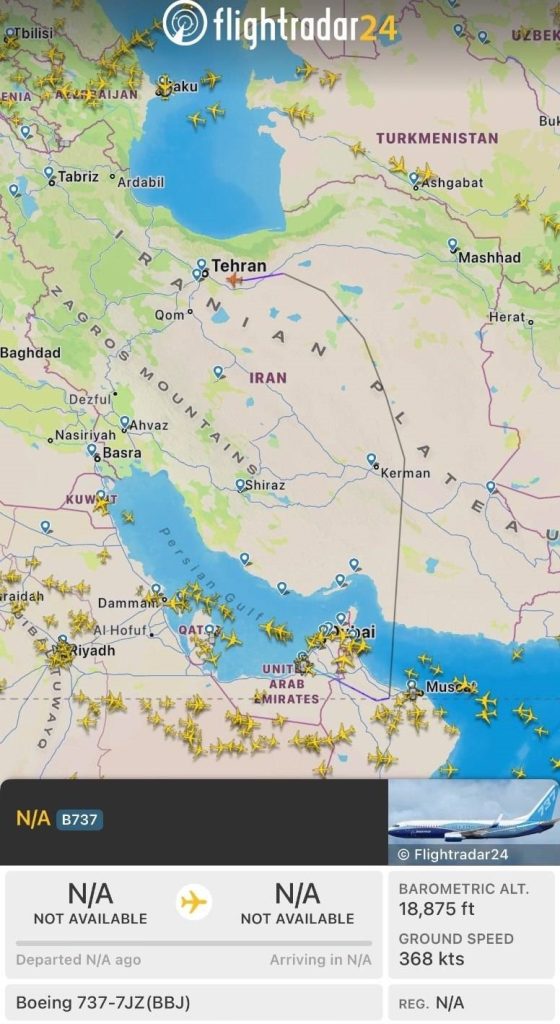
According to regional and international sources, the UAE has committed to releasing between $10 and $20 billion in Iranian financial resources, of which this delivery is the first installment.
Pakistan and Qatar Credited
The SNSC statement thanked the Islamic Republic of Pakistan and the State of Qatar for their mediation roles. Pakistani PM Shehbaz Sharif confirmed the deal on X: “Following intensive talks, we are pleased to announce that the Peace Deal between the United States of America and the Islamic Republic of Iran has been REACHED.”