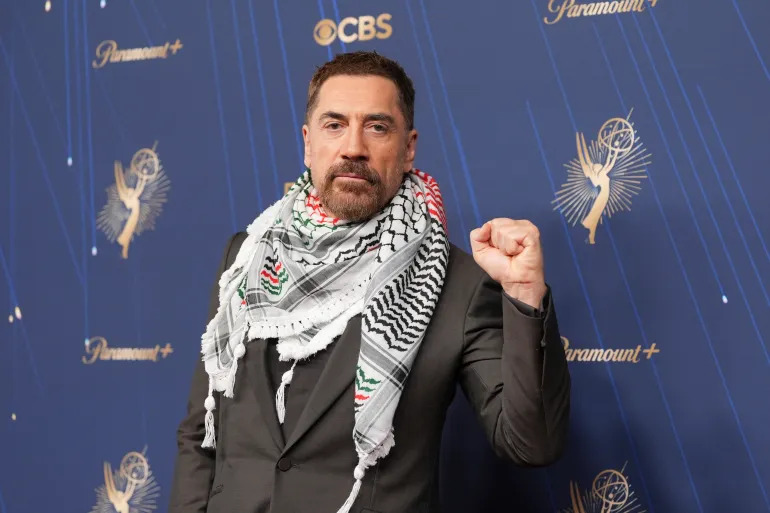

A group of 81 prominent film industry figures, including Oscar-winning actors Tilda Swinton and Javier Bardem, have signed an open letter published in Variety on Tuesday, February 17, sharply condemning the Berlin International Film Festival (Berlinale) for its silence on Israel’s ongoing war in Gaza.
The letter, coordinated by the Film Workers for Palestine collective, accused the festival of “institutional silence” on what the signatories described as Israel’s genocide against Palestinians, and called on Berlinale leadership to “fulfill its moral duty and clearly state its opposition to Israel’s genocide.”
Other notable signatories include British director Mike Leigh, American filmmaker Adam McKay, actor Brian Cox, Belgian director Lukas Dhont, photographer Nan Goldin, and actress Alia Shawkat — all of them past or current Berlinale participants.
Wim Wenders’ Comments Spark Outrage
The controversy was triggered during the festival’s opening press conference on February 13, when Berlinale jury president and acclaimed German director Wim Wenders was asked about the German government’s support for Israel. Wenders responded that filmmakers “should stay out of politics,” claiming that filmmaking was “the opposite of politics.” The remarks immediately drew widespread backlash from the international film community.
The signatories of the open letter stated they “fervently disagree” with Wenders’ position, arguing that filmmaking and politics cannot be separated. The Hollywood Reporter
Indian author and activist Arundhati Roy, who had been scheduled to appear at the festival, withdrew her participation, calling Wenders’ comments “unconscionable” and “jaw-dropping.” Roy wrote in India’s The Wire newspaper that the festival’s stance amounted to “shutting down a conversation about a crime against humanity even as it unfolds before us in real time.”
Double Standards
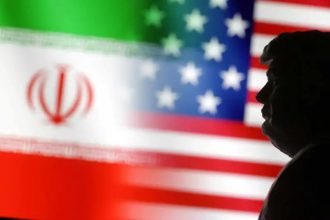
The open letter noted that the Berlinale’s stance stands in direct contrast to its policy on Russia’s war in Ukraine and on the situation in Iran Al Jazeera — a point that has fueled accusations of selective outrage and anti-Palestinian bias at one of the world’s most prestigious film festivals.
The signatories also expressed deep concern that the German state-funded Berlinale was helping implement what Irene Khan, the UN Special Rapporteur on Freedom of Expression, recently condemned as Germany’s misuse of legislation to restrict advocacy for Palestinian rights and shrink discourse in academia and the arts. The Hollywood Reporter
Censorship
The letter went further, accusing the festival of actively policing filmmakers. Last year, filmmakers who spoke out for Palestinian life and liberty from the Berlinale stage reported being aggressively reprimanded by senior festival programmers. One filmmaker was reportedly investigated by police, and Berlinale leadership falsely implied that the filmmaker’s speech — rooted in international law and solidarity — was “discriminatory.” The Hollywood Reporter
Berlinale head Tricia Tuttle issued a response, stating that “free speech is happening at the Berlinale,” and that artists “should not be expected to comment on all broader debates about a festival’s previous or current practices over which they have no control.” The statement did little to quell the controversy.
Award Rejection
The backlash extended to the festival’s awards ceremony. Tunisian director Kaouther Ben Hania refused to accept an award for her film The Voice of Hind Rajab, stating that festival organizers had “given political cover to genocide by denigrating those who protest.”
Context
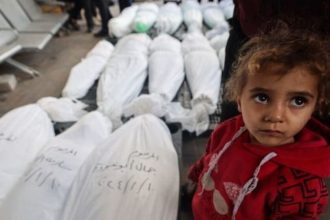
The war in Gaza was sparked by Hamas’s October 7, 2023 attack on Israel, which resulted in the deaths of 1,221 people, according to an AFP tally. Israel’s retaliation has left at least 71,000 people dead in Gaza, according to the health ministry in the Hamas-run territory, whose figures the United Nations considers reliable. France 24
The Berlinale controversy reflects a widening rift between Western cultural institutions and the global film community over the conflict, with the festival increasingly becoming a flashpoint in debates over art, politics, and moral responsibility.