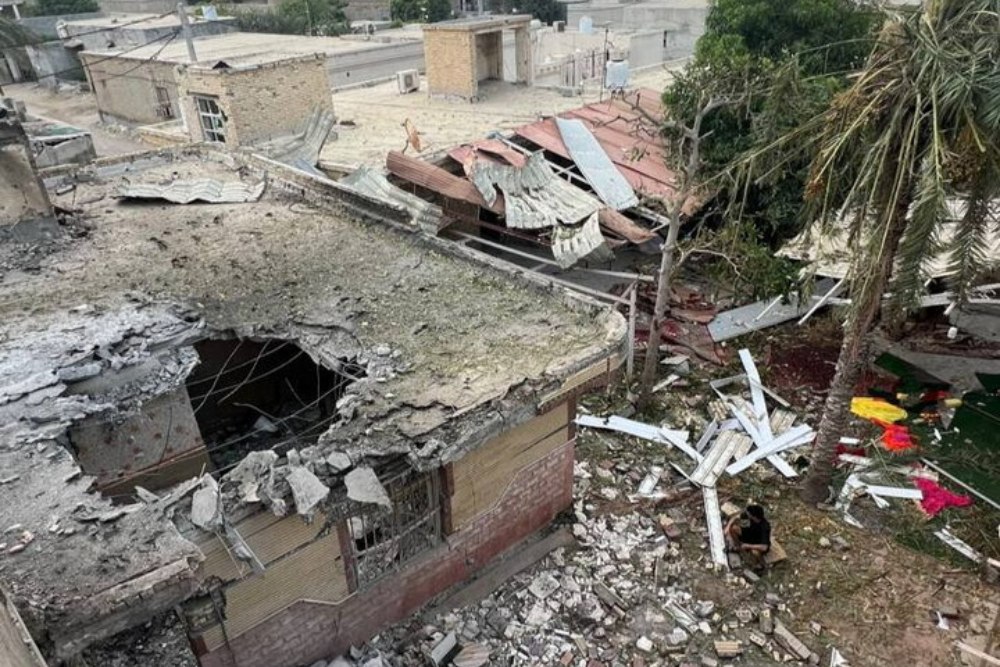
A UN fact-finding mission has confirmed that a US airstrike on September 1 struck a home in Kuhestak, Hormozgan Province, during a wedding celebration, killing five civilians — including two children and a woman — and wounding dozens more. The finding shifts the Kuhestak strike from a contested political claim into a documented case with clear implications under international humanitarian law. As Washington maintains the matter is “under review,” the case has become a test of whether international accountability mechanisms apply equally to all states, regardless of their power.
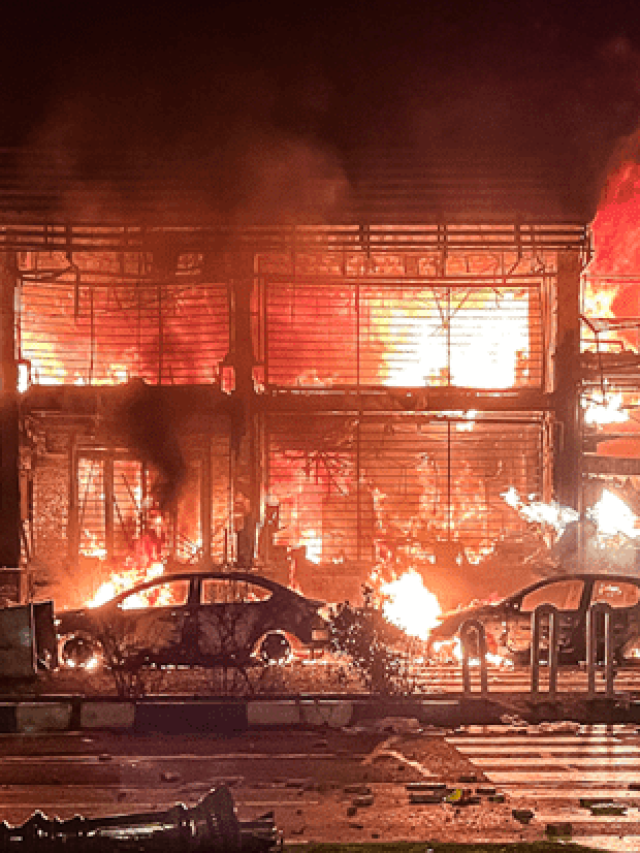
On September 1, a US airstrike struck a home in Kuhestak, a coastal town in Iran’s Hormozgan Province, while a wedding celebration was underway. According to the UN Independent International Fact-Finding Mission on Iran, credible reports and information gathered by the Mission indicate that five civilians — including two children and a woman — were killed, and dozens more were wounded. The Mission, chaired by Sara Hossain, said the strike, along with an earlier one on July 30 in nearby Qeshm that killed a family of four, raises serious questions about whether the United States met its obligations under international humanitarian law to protect civilians during military operations.
That finding matters precisely because of where it comes from. This is no longer a dispute confined to statements from Tehran and denials from Washington; it is an assessment by an independent body operating under a UN mandate. Mission expert Max du Plessis noted that repeated airstrikes resulting in civilian deaths raise serious questions about whether all necessary precautions were taken — and warned that a failure to meet these obligations could carry international legal consequences, including potential responsibility for war crimes. The Mission has stopped short of a formal legal verdict; it has called for further investigation. But that is exactly the point: fact-finding is not the end of an accountability process, it is the beginning of one.
Washington’s public posture — that the matter remains “under review” — sits uneasily against this backdrop. An internal military investigation, however well-intentioned, cannot substitute for independent, external scrutiny. This is not a novel principle; it is a cornerstone of how the international community has approached allegations of unlawful conduct in every other conflict for decades. States under investigation do not get to serve as sole judges of their own conduct — at least not if the resulting system is to retain any claim to consistency.
That consistency is precisely what is being tested at Kuhestak. International humanitarian law rests on a small number of foundational principles: distinction between combatants and civilians, proportionality in the use of force, and the duty to take all feasible precautions before and during an attack. When a strike hits a private home during a wedding, killing children among the dead, these are not abstractions — they are the exact questions a credible, independent investigation exists to answer. The Mission’s language is deliberately measured, but the underlying facts it has documented are not in serious dispute: a strike happened, civilians died, and the surrounding circumstances warrant scrutiny under the laws of armed conflict.
The deeper issue is one of application. International legal mechanisms have historically moved with real speed against weaker states, while major powers have often been met with caution, procedural delay, or diplomatic accommodation. If Kuhestak follows that familiar pattern — a documented finding met with silence, deferral, or an unreviewable internal process — the damage will not be limited to one case. It will confirm, once again, that accountability under international law depends less on the facts than on the power of the state involved.
That is why what happens next carries weight beyond Iran. The relevant international bodies — the UN Human Rights Council, mechanisms tied to international humanitarian law, and special rapporteurs mandated to protect civilian life — now have a documented basis to act. Their task is not to take a side in the broader US-Iran-Israel conflict; it is to uphold a principle that predates and outlasts this conflict: that civilian life carries equal weight regardless of nationality, and that credible findings of civilian harm require an independent legal process, not just a domestic review controlled by the accused party.
The facts of what happened in Kuhestak are, to a significant degree, established. What remains unresolved is whether the international system is willing to convert documentation into accountability. That is the real test — and it is a test of the system’s credibility, not merely of one incident.