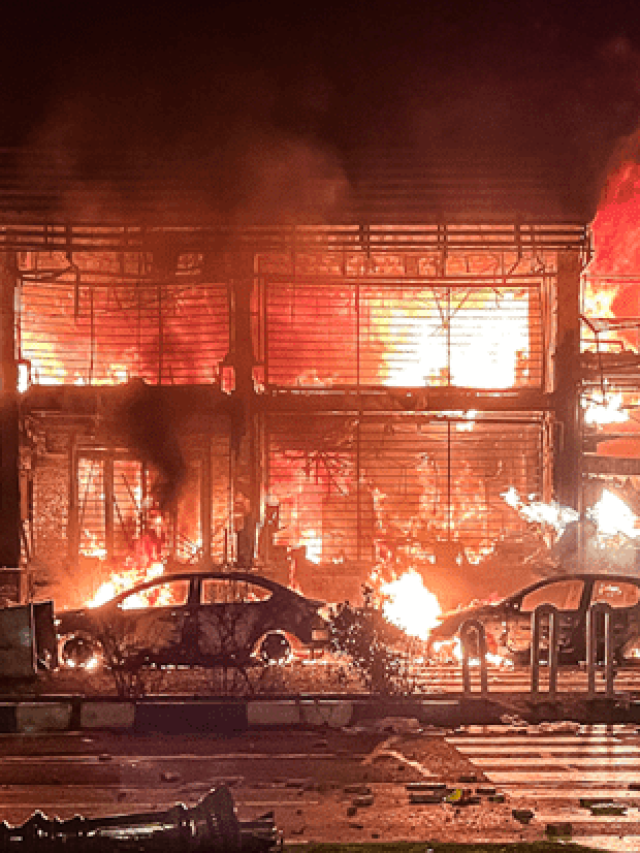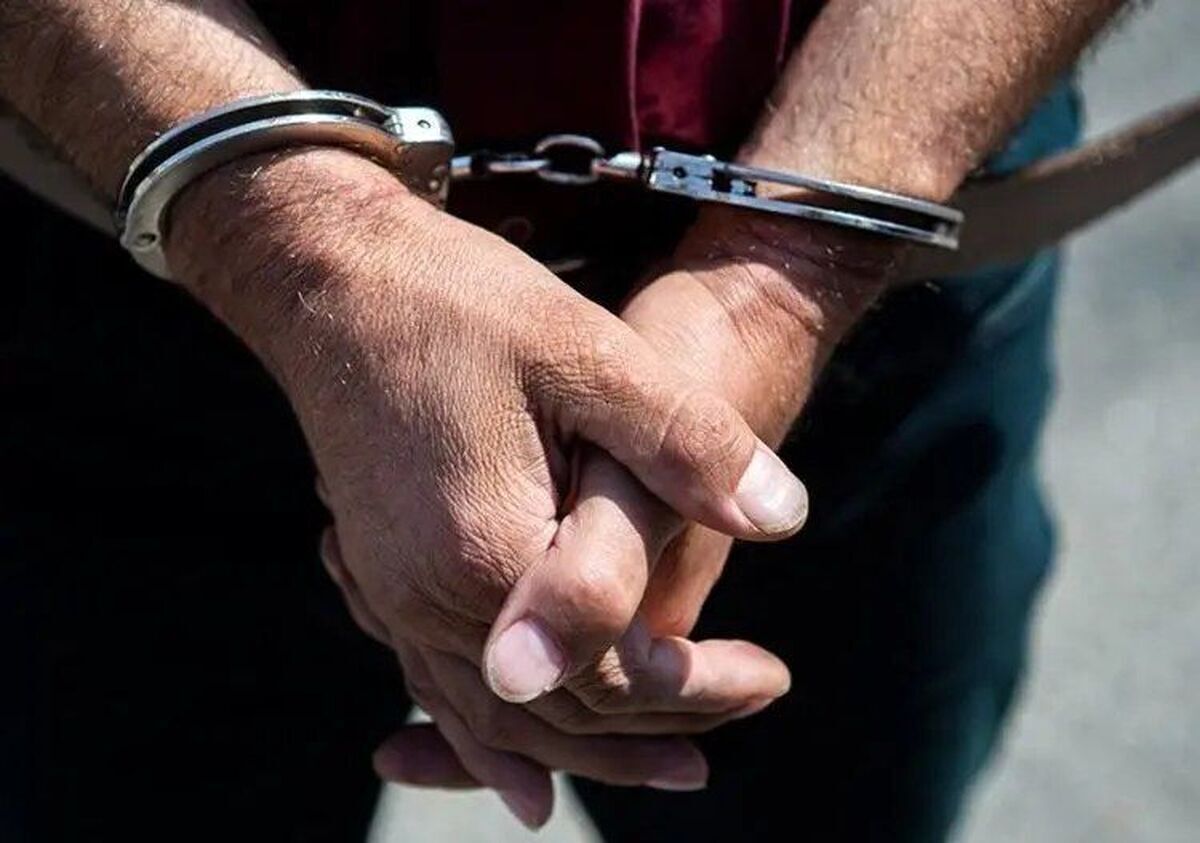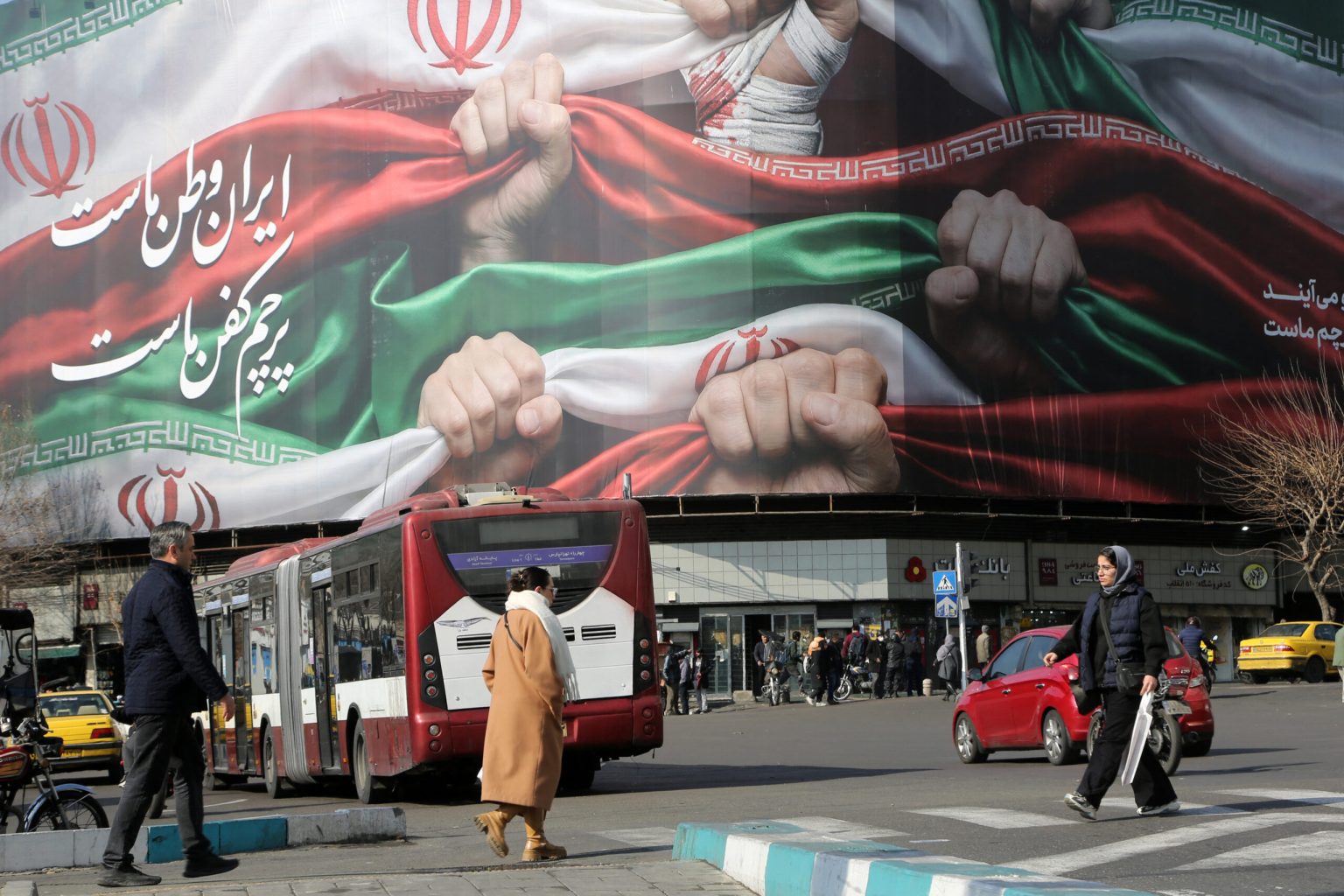

Just before the new year, Iran witnessed one of the most violent protest movements it has seen in recent years. What began as strike actions by Tehran shopkeepers — protesting the sharp collapse of the Iranian rial against the dollar and the resulting inflation — quickly evolved, over the following weeks, into large-scale demonstrations. According to both officials and eyewitnesses, armed groups emerged within the protests, targeting security forces and civilians alike. The unrest left 3,117 people dead, of whom 2,427 were identified as security personnel and civilians, according to official sources. The protests also drew notable coverage from American media, with President Trump pledging to provide protesters with “assistance.” As the protests subsided in recent days — following an internet blackout and a sweeping wave of arrests — a separate and potentially more dangerous threat began to intensify: the completion of a U.S. military buildup in the region, raising the prospect of a new American-Israeli strike on Iran.
To understand the background of these protests and the broader threats facing Iran, Haber spoke with Navid Zarrin Naal in Tehran — a researcher and historian holding a doctorate from Columbia University, with postdoctoral work at universities across South Asia and Africa. Zarrin Naal is currently a visiting lecturer at the University of Tehran and serves as a lecturer at the University of Management Sciences in Lahore, Pakistan. He also hosts an analytical program called “Colonial Archives.”
Iran Has Witnessed Several Major Protest Waves — What Distinguishes This One?
Navid Zarrin Naal: That is correct. The Green Movement emerged in 2009 following the disputed presidential election between Mir Hossein Mousavi and Mahmoud Ahmadinejad. The 2017–2018 protests were triggered by rising food prices — eggs in particular. Then came the 2019 protests against fuel price hikes, which were ultimately reversed following public pressure. After that, the “Woman, Life, Freedom” movement erupted in 2022 over the mandatory hijab issue. The fundamental difference with the current wave of unrest is that it directly involved foreign intelligence intervention — something that was not a feature of the earlier rounds.
In the current case, the protests broke out spontaneously when a number of shopkeepers in Tehran began to strike, as inflation was consuming their inventories and shop values. Inflation in Iran currently runs between 30 and 40 percent annually, with prices sometimes doubling within a single year. As a result, protests spread spontaneously from Tehran’s Grand Bazaar on December 29th and then expanded across the country. Until January 7th, the demonstrations were largely spontaneous — and notably, police did not use systematic violence against protesters.
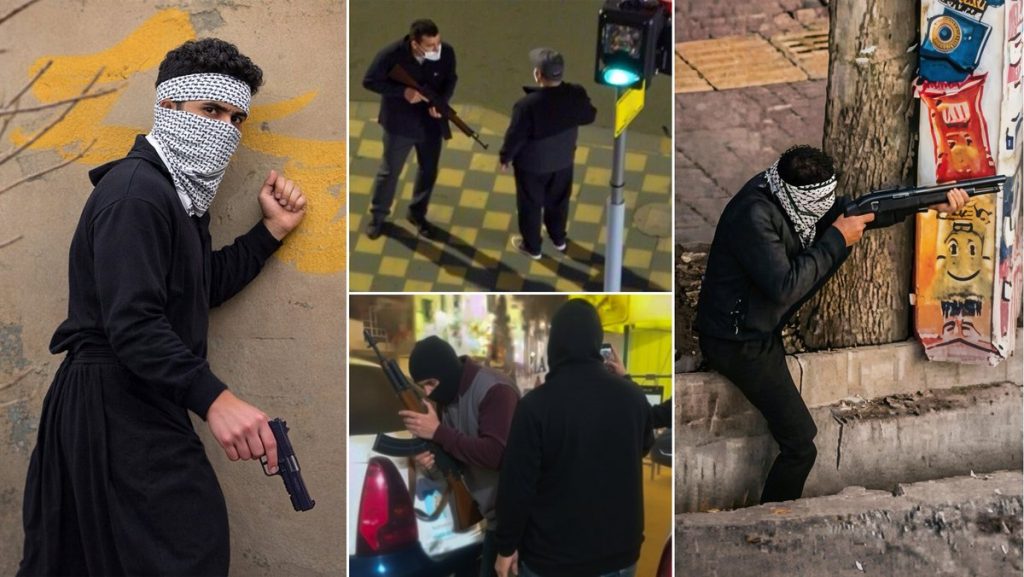
From January 8th onward, however, it appears — as Israel and the United States had been planning for some time — that armed groups were directly inserted into the protests to sow chaos and disorder. Evidence suggests that some of these groups used weapons not standard to Iranian security forces, and fired on protesters themselves. According to official accounts, these armed groups had their command, financing, and weapons supplied from outside the country.
Beyond the armed elements, violence during the unrest was not only in the hands of these groups — some of the angry protesters who were economically frustrated also participated in destruction and attacks. After January 12th, however, the Iranian government began cracking down and arresting some members of the armed groups. The situation is now fully calm.
Both Israeli and American Officials Tacitly Admitted That Foreign Elements Were Active in Iran — What Impact Did This Have on the Government’s Response?
Yes — and I believe this is strong evidence of direct American and Israeli involvement. In a U.S. government tweet, former Secretary of State Mike Pompeo wrote that behind every protester there was an Iranian Mossad agent. Separately, Israeli Channel 14 broadcast statements explicitly calling for direct Israeli involvement in the unrest and protests.
That said, even if they try to deny their role and claim legitimacy — and the historical record does support the existence of such interference — these actors have precedent going back as far as the 1953 CIA-backed coup against Prime Minister Mohammad Mosaddegh. Looking at the latest unrest through that lens, we find parallels: armed individuals referred to as “Shaboon Bimokh” (roughly meaning “mindless thugs”) were used in post-revolutionary California to stir chaos. In the recent protests as well, witnesses reported seeing individuals dressed in disheveled clothing carrying daggers and guns.
Accordingly, public confessions and judicial records provide evidence of the existence of foreign interference, and the fact that obtaining weapons is not easy in Iran reinforces that conclusion. If some of these groups were carrying rifles, the question is how they obtained them — most likely through smuggling channels facilitated by foreign intelligence services.
What Role Did These Groups Play and What Do They Reveal About Inequalities in Iranian Society?
At the outset, the government drew a deliberate distinction between three categories of participants and used different terminology for each: spontaneous protesters (mo’tarezin), rioters (aghashiyan), and armed elements under foreign support (terorist-ha). According to my monitoring of Iranian state institutions, prior to January 8th, no Iranian official was claiming that protestors were being supported by foreign intelligence services. Those claims only emerged after January 8th.
Many of those labeled as “rioters” were simply young people consumed by economic hardship and a sense of blocked horizons. Today, inflation gnaws at them and the cost of housing — buying an apartment or getting married — has become genuinely daunting. As for thinking differently about consumption, Iranian people today have high consumer aspirations: they want nice homes, comfortable furniture, and so on. For some of my Iranian friends, this contrast has become a source of rage — the protesters, some of whom adopted an anarchist mindset, were determined to overturn the entire system. As for the armed groups, we have limited information about them. Their names were reported after some were arrested, but few details were released. What we do know is that they came from different parts of the country — and violence tended to concentrate in certain provinces, notably Iranian Kurdistan, more distant from Tehran.
Western Media Typically Frames Iran’s Protests as Political Dissent Against the Regime — How Accurate Is This Framing, and Where Does It Fall Short?
The narrative pushed by much of the Arab and Western press — and repeated uncritically — focuses almost entirely on the political dimension, implying that everyone wants regime change and is demanding freedom from an Islamist government. I believe, however, that many Iranians do not place the political rights and freedoms that liberals in the West prioritize at the top of their concerns. The core issue is economic. Even in 2022, many joined the protests not because they wanted a Westernized political option, but because they were experiencing severe economic humiliation — and that humiliation happened to coincide with the hijab debate.
At the level of political opposition, we must distinguish between Iranians inside the country and those in the diaspora. Inside Iran, there are individuals who genuinely oppose the government and seek change, but who do not want cooperation with Americans or Israelis to achieve it — because they believe this work is not being done for Iran’s benefit. In the diaspora, particularly in the United States, the dominant sentiment tends to be that regime change is desirable and that figures like Trump offer a harder line toward that end.
Within Iran itself, there are also diverse voices: some calling from their balconies against the Supreme Leader and the Velayat-e Faqih, but this does not necessarily mean they want the regime overthrown — it is possible to want the system preserved while calling for the removal of the Supreme Leader. There is a faction that genuinely wants regime change, influenced by Persian-language channels abroad like the BBC Persian or Voice of America. Others simply want things to be better. In reality, these are practical reformers who believe they can push the country forward — but are confronted with an economic crisis and a leadership that they believe lacks sufficient control over the economy and is generating new forms of inequality.
Sanctions, Mismanagement, and the Economic Crisis — How Do Iranians Cope?
Sanctions and domestic corruption are indeed the two main causes of economic discontent. But sanctions themselves can also give rise to corruption — creating shadow networks and parallel markets that breed opacity and generate rent-seeking opportunities for those connected to the security apparatus. In that sense, both sanctions and domestic corruption are interrelated and mutually reinforcing as drivers of economic problems.
My position — especially since I am an Iranian living in the United States — is that criticism should be directed at the sanctions themselves. They are a product of American hegemony: the U.S. controls global financial architecture and ties every country to those systems. The United States, therefore, has the ability to use sanctions as a tool for political destabilization. Iran is an independent country with a foreign policy independent of U.S. dictates — and that, ultimately, is why these sanctions are being imposed.
As for the government’s response during the protests — it attempted to address economic grievances by subsidizing traders and expanding subsidies. The government provides cheap exchange rates for goods and sets prices at lower than market value, conditionally — that goods must not be sold at market price. However, many suppliers of these subsidized goods have been selling them inside Iran at near market prices, pocketing the price differential — at the expense of consumers. The government ultimately abolished the preferential exchange rate for traders and business owners and eliminated the corresponding monthly payments to those who had come to rely on them.
The Looming Threat: Iran and a Possible U.S.-Israeli Strike
I believe there is a real possibility of a joint U.S.-Israeli strike — and any such strike, even if the other does not directly participate, would be significantly more destructive given the military buildup. Personally, when I lost internet access, I felt a level of anxiety I had not experienced before. Before the internet was cut, I was always following Western news about psychological warfare against Iran and focused on assessing U.S. military capabilities. Reading about this continuously caused great distress. Now that the internet has been restored, I feel somewhat calmer — though I trust it less.
What is remarkable is how calm the people here are. They talk about it everywhere — in taxis, schools, with their families. They are aware of the 12-day war last year, which was particularly painful for those living near non-military buildings that were targeted. Despite that, people are not hoarding food, not panicking, and not fleeing to shelters. They remain extraordinarily calm and composed — capable, to some degree, of deflecting anxiety from Israelis and warding off pressure from the U.S. — and even somewhat defiant. Iranians are calm and stoic, but they are fully prepared for a military confrontation.
Americans are not actually willing to sacrifice their own soldiers. If the Israelis advance with their workshops — some of which have become progressively more advanced — Iran will also be able to respond. Iran has excellent universities, engineers, and mathematicians who have trained many students. It has developed very sophisticated missile systems. These engineers are educated domestically but sent abroad for further training. In my view, Iran’s best deterrent at this stage is missile development — because reports suggest it is already near nuclear weapons capability. This is being done, they claim, for Islamic reasons. I cannot determine the real reason for the absence of a nuclear bomb — but absent one, the missile program remains the greatest deterrent.
Is Diplomacy Still Possible? What Concessions Could Iran Make?
In my view, the Iranian government’s persistent calls for negotiations with the United States — particularly through Foreign Minister Abbas Araqchi — are deeply misguided. They are calling for talks with their enemy. The U.S. will lure them in, make them believe it wants to negotiate, and then betray them — exactly as happened during the 12-day war, when Iran had been under preparations for a strike just two days before. I do not believe negotiations in the near future are realistic or that they would have genuine content. Even when Iran signed the 2015 agreement and the U.S. ratified it, the Americans still continued to impose sanctions on Iran. I believe that even if Clinton had won the 2016 election, the agreement would have been abolished — and with Trump, this process will only be faster and more decisive.
Looking at American imperial history, the U.S. has consistently broken its promises to indigenous peoples — and here too, the U.S. will not be reliable. I believe the current government, whose president recently passed away, must grasp this reality. Perhaps for now, the negotiation path is closed. But in the future, it may become possible again.
What Does the United States Want From Iran — and What Does Iran Want From the U.S.?
What the United States wants is simple: it wants to turn Iran into a compliant, broken state. I do not believe regime change, in the strict sense, is an accurate framing — because the U.S. wants a government that follows its orders, guarantees Israel’s security, and allows whatever Washington wants done to be carried out. It will promote, as a new leader, Reza Pahlavi — who is actively promoted by some media outlets and who currently lives in U.S. exile. But I do not believe the U.S. actually wants anything like that — what it wants is to turn Iran into a broken, failed state.
As for Iran, it simply wants to be left alone. Iranians want to manage their own affairs and maintain influence and reach in the region. The presence of the United States and Israel in the region is a source of threat — and therefore Iran will seek to expel them from it.